
Knowledge Centre — export & packaging compliance
Exporting goods on pallets: the sequence that avoids late surprises
Export pallet problems are nearly always discovered too late — at the loading bay, with a booked vehicle waiting. The fix is to move the pallet decision earlier, into stock selection.
Published by Palletmove. Last reviewed: 3 September 2026. Operational guidance for logistics and procurement teams. It is not legal advice, customs advice, certification, or a guarantee that a given consignment will be accepted.
Step 1 — Decide the pallet before the order is picked
Treat export pallets as a controlled item with its own stock location, not as whatever is nearest the bay. Once a load is built, changing the pallet under it costs far more than selecting correctly in the first place.
Step 2 — Confirm what the packaging is made of
GOV.UK guidance is clear that solid wood packaging material, pallets included, falls under the wood packaging material rules for movements between Great Britain and other countries, including EU member states. Processed non-solid wood such as plywood sits outside those rules. Establish which you are actually shipping on, because sites often hold both.
Step 3 — Inspect the mark, pallet by pallet
The mark on the item is what evidences compliance. Certification paperwork cannot substitute for it. If a required mark is missing or illegible, an invoice, a supplier declaration or a treatment certificate does not fix the pallet — and no one should be told that it does.
Step 4 — Remove pooled stock from the decision entirely
Pooled pallets belong to their operator and remain under the operator's control. They are not surplus stock, not export stock you can commit, and not yours to send abroad on the assumption they will come back. Segregate them and deal with the operator directly.
Step 5 — Record what you did
Photographs, counts and provenance take minutes at the point of loading and are almost impossible to reconstruct afterwards. If a consignment is later queried, the record is the difference between a short conversation and a long one.
Step 6 — Know the stopping point
If inspection leaves you unsure, stop and ask. Your freight forwarder, the relevant plant-health authority or an inspection body can answer the compliance question. We can get the stock ready either way, but that call is theirs to make.
Common failure points
Where export loads actually come unstuck
| Failure point | Why it happens | Practical response |
|---|---|---|
| Mark sanded, painted or split | Used stock accumulates surface damage in ordinary handling. | Legibility is the test. Move it out of the export stack rather than arguing the case at the bay. |
| Repair replaced the marked component | A block or stringer carrying the mark was swapped during repair. | Inspect the specific pallet after any repair, not the batch it came from. |
| Paperwork used as a substitute | A supplier letter is assumed to cover the load. | It does not replace a required mark. Treat the two as unrelated. |
| Pooled pallets in the export stack | They arrive inbound and blend into general stock. | Segregate by operator and return through their network. |
| Footprint assumed to imply a standard | A 1200×800 pallet is assumed to be EPAL. | Dimensions are not a certification. Check marks and construction. |
Pre-dispatch photograph set
- Each export pallet square-on from the side, marks visible.
- Close-up of every mark, legible at full size.
- Underside and any repair boards.
- Tape measure across the footprint.
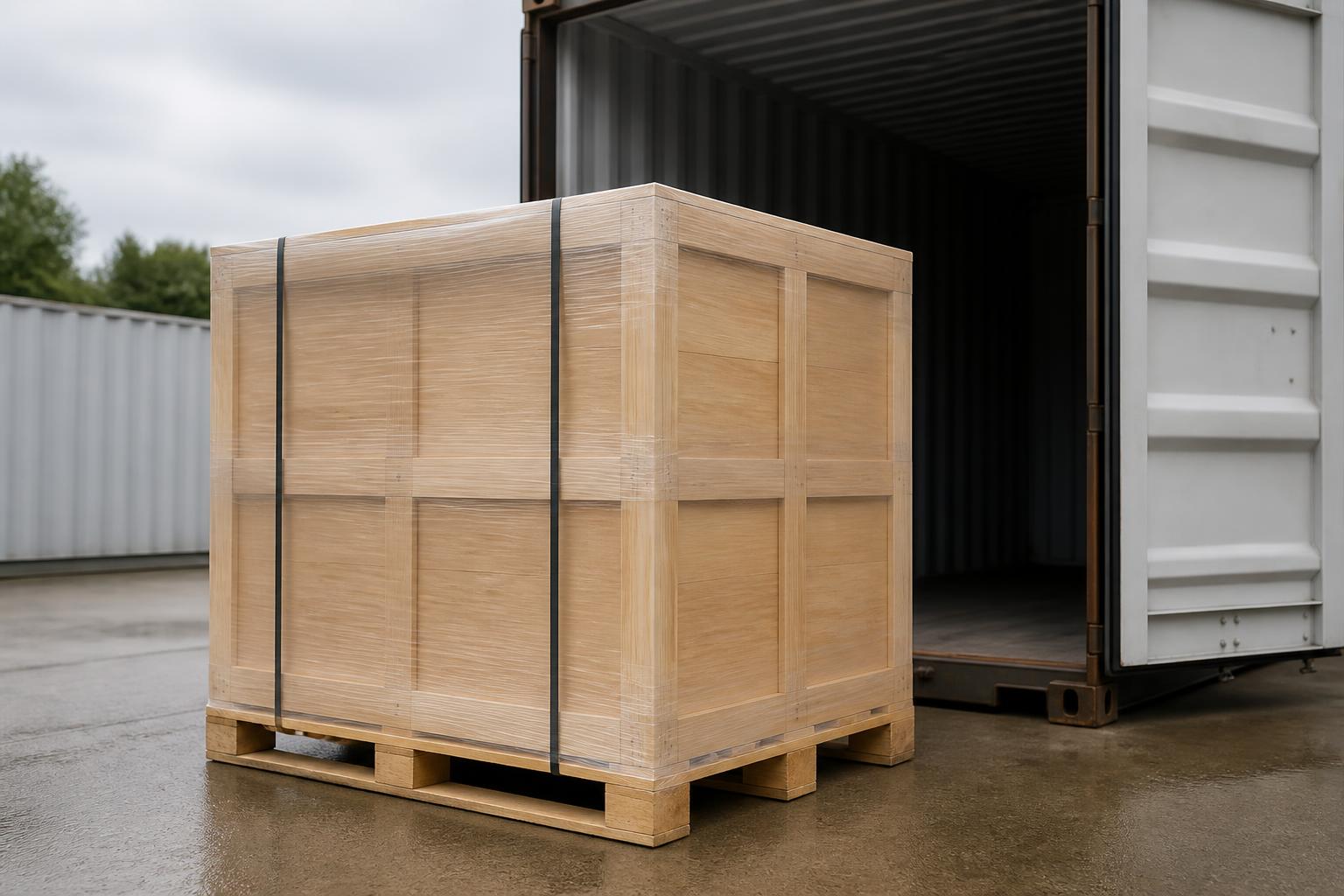
- The finished, wrapped load with pallet type identifiable.
Records to retain with the consignment
- Counts of marked, damaged-mark and unmarked pallets.
- Provenance of the pallets used.
- Destination country and mode of movement.
- Who inspected the load and on what date.
- Any advice received, from whom, and when.
Next
Continue
- ISPM15 explainedWhat the mark evidences.
- GB to EU pallet movementsSettled points and genuine uncertainty.
- Pallet specificationsFootprint, construction and grade fundamentals.
- Business pallet supplyAccount supply when export stock has to be replaced.
- Pallet CheckerThe export branch, question by question.
- Talk to PalletmoveDiscuss an export stock review.
Building an export stock process?
We can help you separate, inspect and replenish export-suitable stock as an operational routine.