
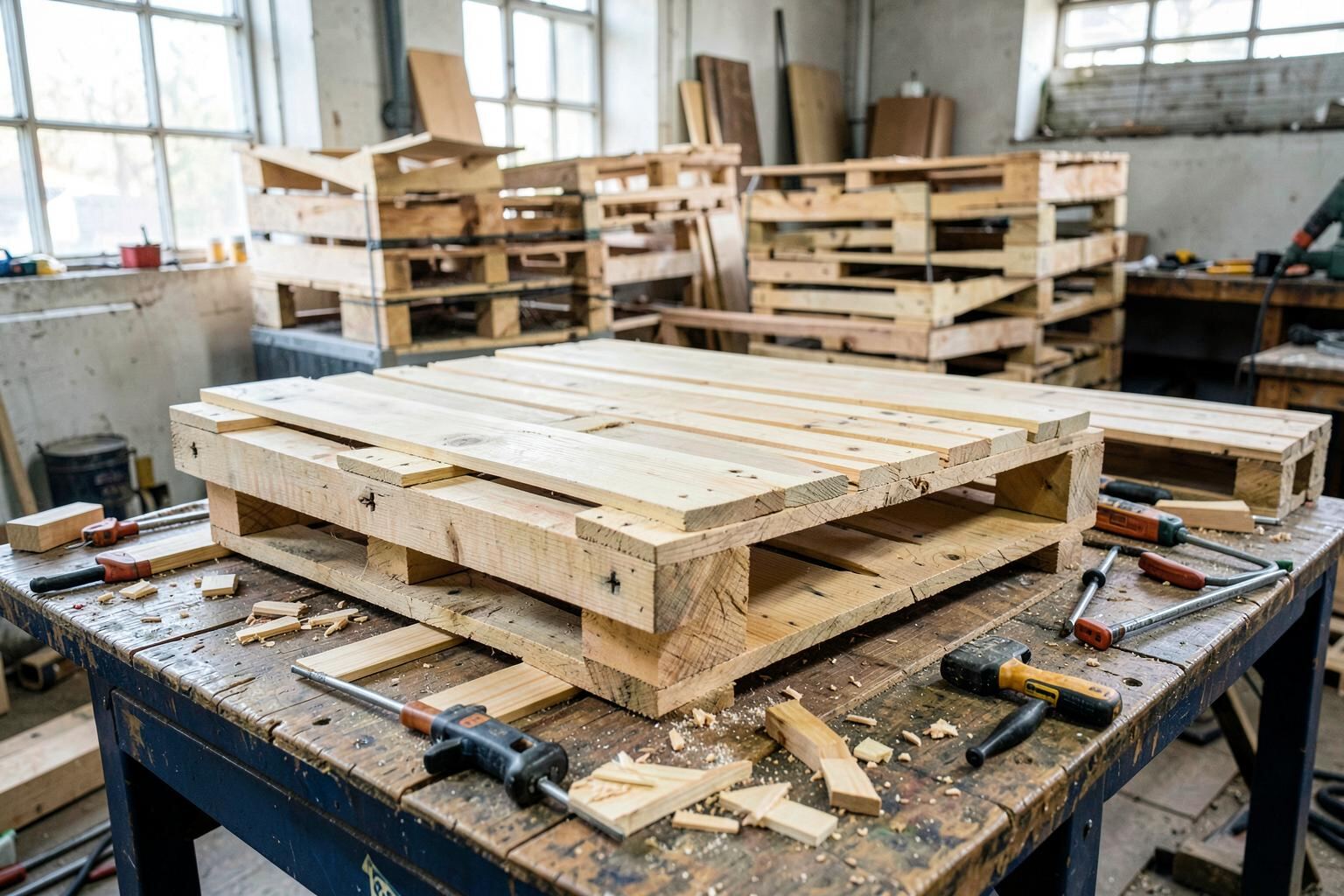
Pallet supply
Bespoke timber pallets, built around your product
Long extrusions, awkward castings, tall unstable units, heavy point loads and vehicle-constrained loads can all defeat a standard footprint. We build bespoke pallets to a written specification agreed with you before anything is made.
When bespoke is the right call
Bespoke is worth it when a standard pallet forces a compromise that matters: overhang that damages the product, wasted trailer space on every journey, unstable stacking that produces recurring claims, or manual handling risk created by the pallet. If a standard footprint carries the load safely and fills the vehicle, it's usually the better-value option.
What we need to specify it
External dimensions, entry arrangement, how the pallet is picked up and by what equipment, how the load sits on it, how the loaded pallet is stacked or racked, the environment it lives in, and whether it's expected to return. We also need the load weight per pallet and whether the concern is static, in transit or in racking, because those behave differently.
We agree the specification with you in writing before anything is built.
Cost and lead time
Volume is the main factor: a repeating requirement can be planned efficiently, while a single custom batch carries setup cost across few units. Timber section, fixing method, export treatment and tolerance all move price and lead time. If you need units quickly, tell us the date first — it can change what's sensible to specify.
Export
A bespoke pallet is still solid wood packaging, so export requirements depend on destination exactly as they would for a standard pallet. Raise export at specification stage, not after the first batch is built.
Delivery
Bespoke stock is made to order, so delivery is planned rather than same-day; we agree a realistic date with you at specification stage.
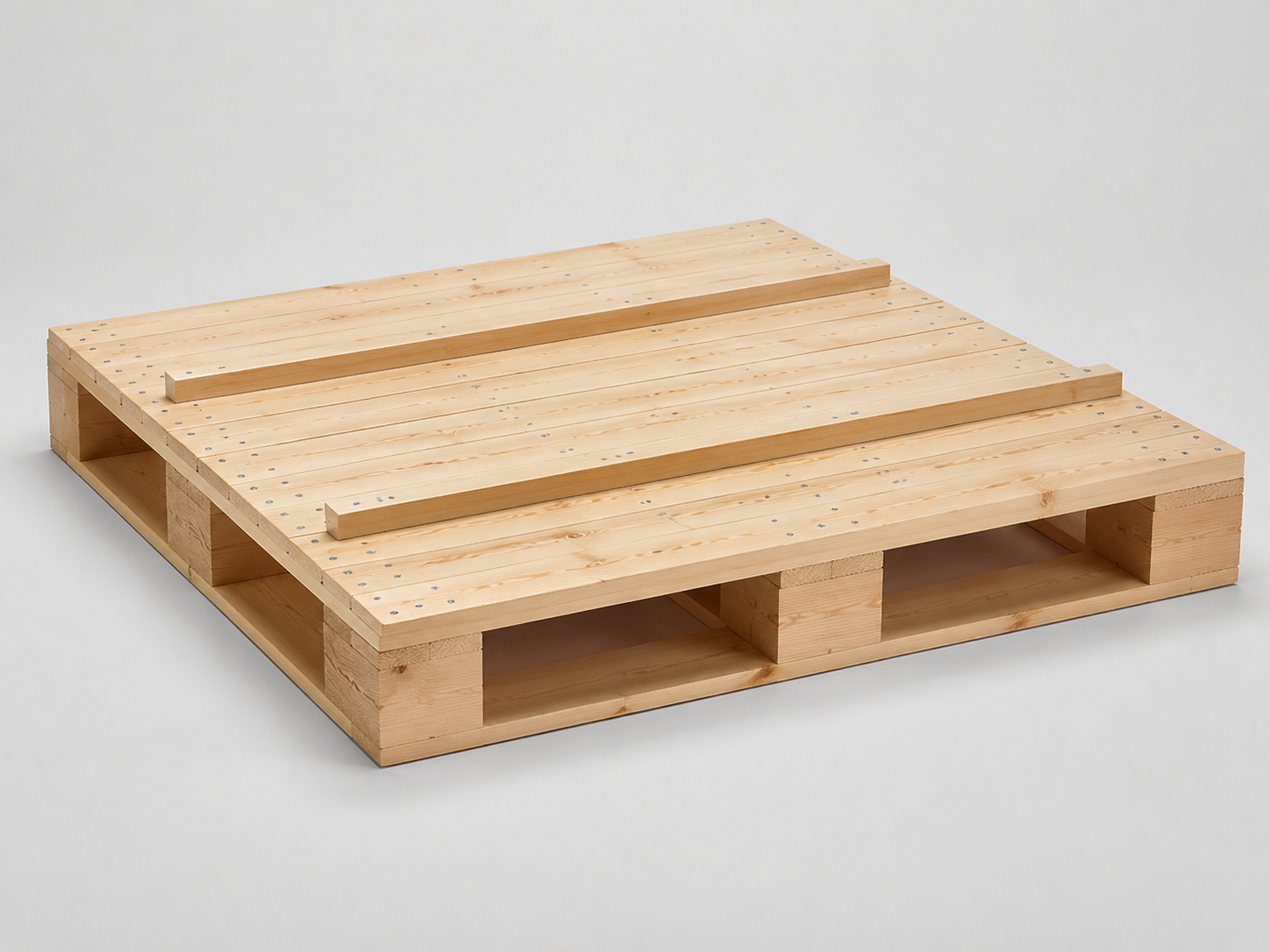
Bring this to a bespoke conversation
- Product dimensions and how the load sits on the pallet.
- Load weight per pallet, and static, transit or racked duty.
- Handling equipment and entry requirements.
- Vehicle or container constraints the pallet must respect.
- Whether the pallet returns, and expected number of trips.
- Export destinations, if any.
- Quantity now and expected annual volume.
| Symptom | Likely answer | What to check first |
|---|---|---|
| Product overhangs the deck and gets damaged | Bespoke or a different standard footprint | Whether an alternative standard size removes the overhang. |
| Trailer runs out of floor before it runs out of weight | Bespoke footprint | Loading pattern and vehicle internal dimensions. |
| Recurring stack collapse or transit claims | Review load and pallet together | Whether the pallet, the load pattern or the wrapping is the cause. |
| Standard pallet carries the load and fills the vehicle | Stay standard | Used standard stock is cheaper, faster and recoverable. |
Speak to a pallet specialist
Describe the product and the journey and we will confirm whether a standard footprint will do the job before quoting anything custom.
What the load figures mean
- Tare weight
- The mass of the empty pallet itself, before anything is put on it. It matters for vehicle payload, air freight and weighbridge figures, not for how much the pallet can carry.
- Static load
- The maximum load the pallet is rated to hold while standing still on a solid, level surface — the pallet fully supported underneath.
- Dynamic load
- The maximum load the pallet is rated to carry while it is being handled or moved, for example on forks or a pallet truck.
- Racking load
- The maximum load the pallet is rated to hold while supported only at its edges or on beams. It often differs from static and dynamic capacity and applies only in the exact rack or support configuration stated by the manufacturer.
Ratings depend on the exact construction, how the load is distributed, how the pallet is supported, its condition and the manufacturer. A rating can never be inferred from footprint alone: two 1200 × 800 mm pallets can behave completely differently. No load or tare figures are published on this page, because there is no single authoritative value for this kind of pallet. Tell us what the pallet has to carry and how it will be supported, and we will confirm the capacity and tare weight against the exact stock we would supply.
Confirm before we can quote a load figure
- Tare weight limit, where vehicle payload or air freight is tight.
- Whether you need a static, dynamic or racking figure — they are different numbers.
- Evenly distributed load or point load, and the footprint of the load on the deck.
- Support configuration: floor, beams, edge-supported racking, automation or conveyor.
- Condition required — new, repaired or used — and how many trips it must survive.
- Quantity, whether it repeats, and the delivery timing you need.