
Pallet supply
Presswood pallets, moulded and one-way by design
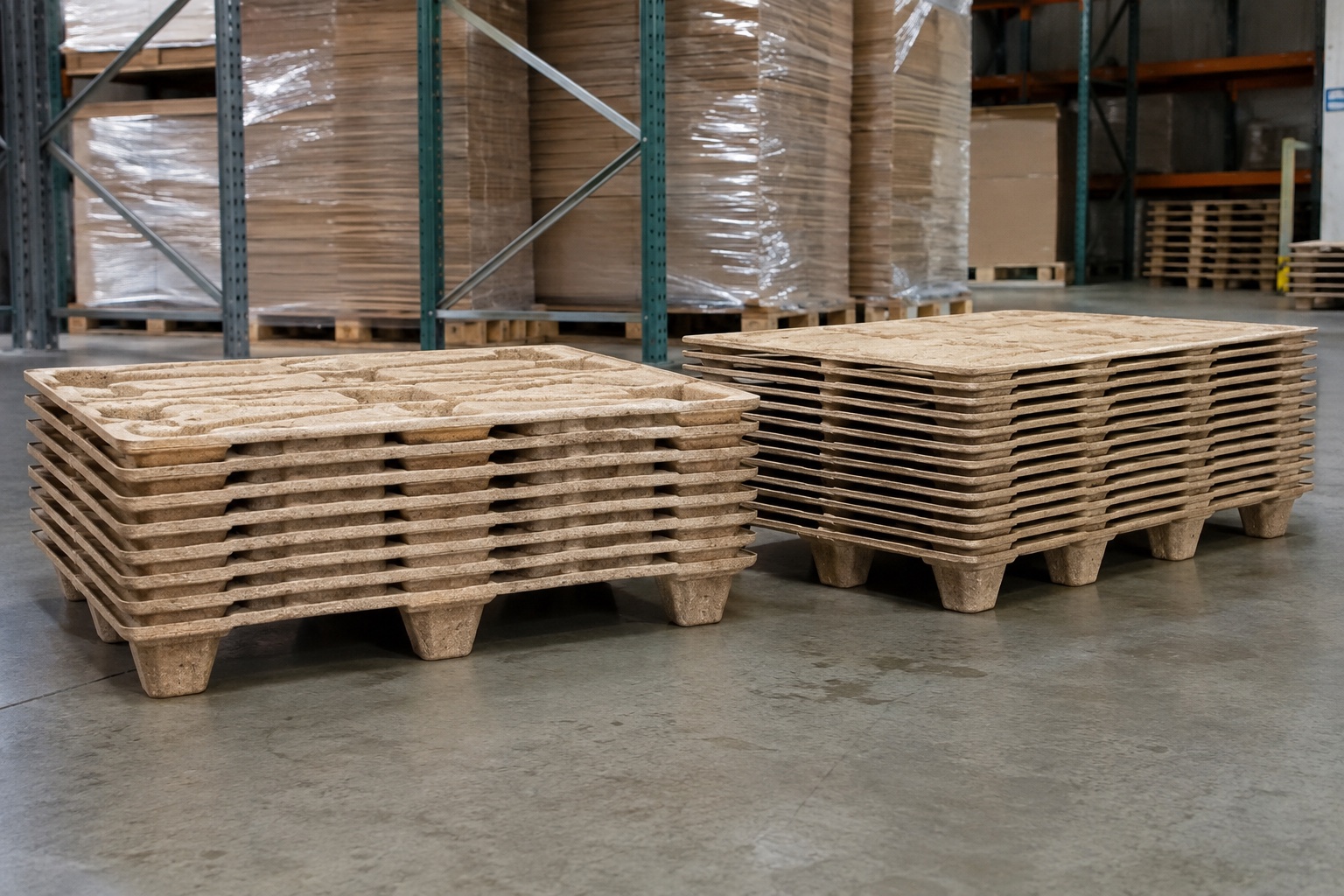
Presswood (sometimes called pressboard) pallets are formed under heat and pressure from wood particles and resin, not built from boards nailed to blocks. That gives them a light weight and a nesting stack, and suits one-way despatch.
What it is
Presswood — widely called pressboard by buyers, and sometimes moulded or pressed-wood — is a single moulded pallet formed from wood particles and resin. Call us and say pressboard if that's your usual term; we will know exactly what you mean.
Typical uses
Outbound despatch where the pallet will not return: air freight and export consignments where weight matters, distribution to customers who will not return pallets, and storage-constrained operations where empty pallets need to nest into a fraction of the floor space a stack of timber pallets occupies. They are consistent in shape, free of nails and protruding fasteners, and light to handle manually.
Identifying presswood
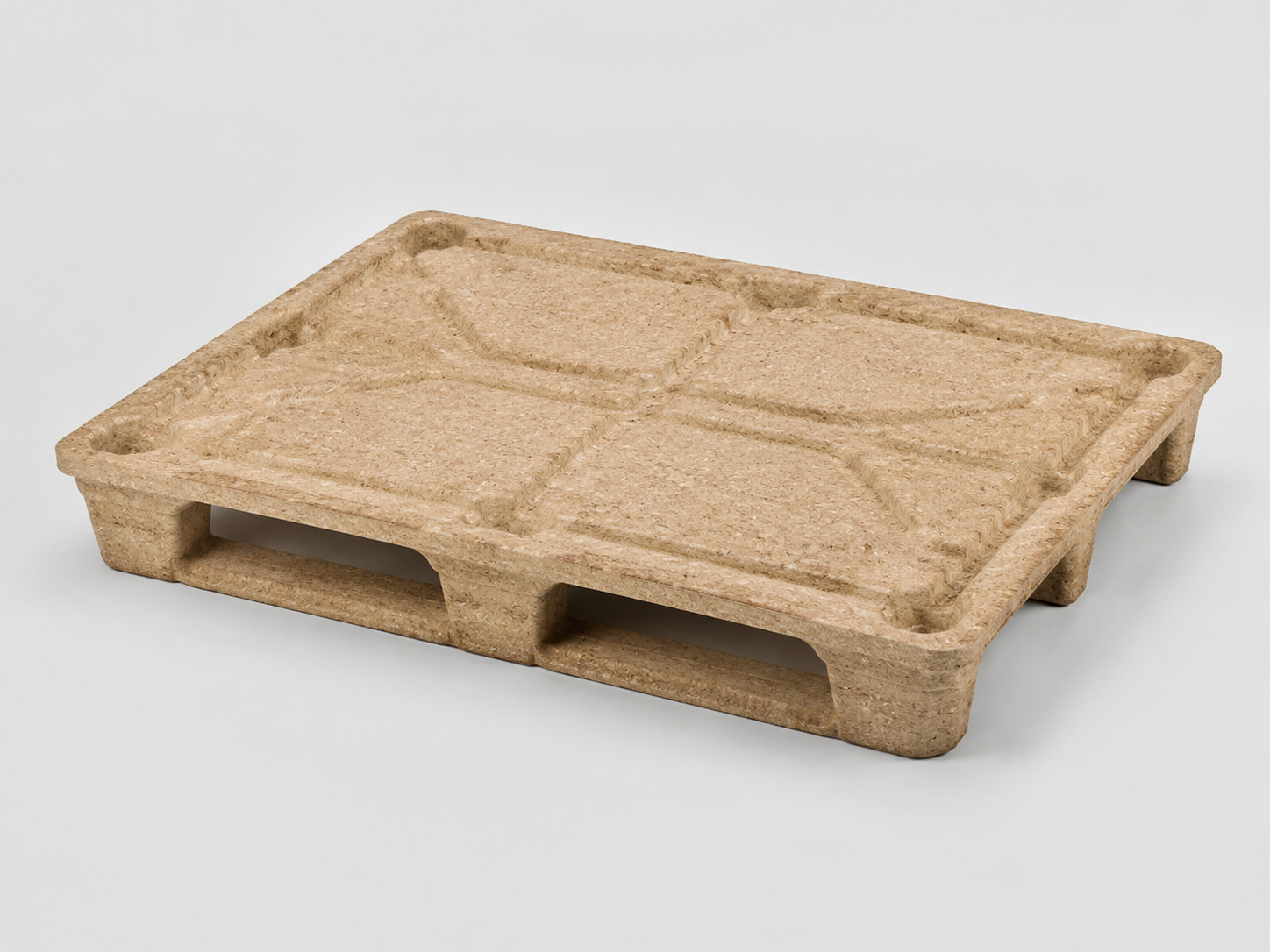
A single moulded piece with rounded, tapered feet and a slightly textured surface, rather than separate deck boards fixed to timber blocks or stringers. Empty units nest into each other. If what you're holding has visible boards and nails, it's a conventional timber pallet.
Export
Export requirements depend on destination. Presswood pallets are manufactured from processed wood particles, and the ISPM15 rules are written around solid wood packaging material, so processed products are generally treated differently — but the position depends on current official guidance and your destination country's requirements. Check the current GB and destination guidance for your route, or ask us and we will point you at the controlling source.
What to check before ordering
Presswood pallets are not intended to be repaired, and behave differently from timber under point loads, prolonged racking and damp conditions. They suit a defined duty not heavy-duty racking. Where a load is heavy, unevenly distributed or destined for long-term racked storage, tell us before ordering.
Delivery
Same-day delivery may be available for orders placed before 10am, subject to stock, vehicle availability, order size and destination, confirmed on the call. Next-day and planned delivery are also available.
Confirm before ordering presswood
- Footprint required, and whether it must match existing handling.
- Load weight per pallet, and whether static, in transit or racked.
- Whether the pallet is one-way or expected to return.
- Destination country, if the consignment is exported.
- Storage conditions — damp or outdoor exposure changes suitability.
- Quantity now, and whether the requirement repeats.
| Factor | Presswood | Conventional timber |
|---|---|---|
| Construction | Single moulded unit formed under heat and pressure. | Deck boards fixed to blocks or stringers. |
| Empty storage | Nests, so return and storage space is much reduced. | Stacks; empty pallets take significant floor space. |
| Repair | Not intended to be repaired. | Repairable and re-enters reuse and recovery streams. |
| Typical use | One-way despatch, export, weight-sensitive freight. | General distribution, racking, repeated circulation. |
What the load figures mean
- Tare weight
- The mass of the empty pallet itself, before anything is put on it. It matters for vehicle payload, air freight and weighbridge figures, not for how much the pallet can carry.
- Static load
- The maximum load the pallet is rated to hold while standing still on a solid, level surface — the pallet fully supported underneath.
- Dynamic load
- The maximum load the pallet is rated to carry while it is being handled or moved, for example on forks or a pallet truck.
- Racking load
- The maximum load the pallet is rated to hold while supported only at its edges or on beams. It often differs from static and dynamic capacity and applies only in the exact rack or support configuration stated by the manufacturer.
Ratings depend on the exact construction, how the load is distributed, how the pallet is supported, its condition and the manufacturer. A rating can never be inferred from footprint alone: two 1200 × 800 mm pallets can behave completely differently. The figures below are the named manufacturer's or standard's own published values for that exact model, reproduced for reference.
INKA presswood pallets — manufacturer model reference specifications
INKA F44
- Dimensions
- 400 × 600 × 120 mm
- Tare weight
- Approximately 3 kg
- Static load
- Three times the dynamic figure, per INKA
- Dynamic load
- 250 kg
- Racking load
- Not published for this model — confirm with INKA and with a test pallet
INKA F36
- Dimensions
- 400 × 800 × 130 mm
- Tare weight
- Approximately 3.5 kg; strengthened 4.5 kg
- Static load
- Three times the dynamic figure, per INKA
- Dynamic load
- 500 kg; strengthened 1,000 kg
- Racking load
- Not published for this model — confirm with INKA and with a test pallet
INKA F64
- Dimensions
- 600 × 800 × 120 mm
- Tare weight
- Approximately 4.5 kg; strengthened 5.5 kg
- Static load
- Three times the dynamic figure, per INKA
- Dynamic load
- 500 kg; strengthened 1,000 kg
- Racking load
- Not published for this model — confirm with INKA and with a test pallet
INKA F86
- Dimensions
- 800 × 1200 × 120 mm
- Tare weight
- Approximately 8 kg
- Static load
- Three times the dynamic figure, per INKA
- Dynamic load
- 350 kg
- Racking load
- Not published for this model — confirm with INKA and with a test pallet
INKA F8-5
- Dimensions
- 800 × 1200 × 125 mm
- Tare weight
- Approximately 9 kg
- Static load
- Three times the dynamic figure, per INKA
- Dynamic load
- 600 kg
- Racking load
- Not published for this model — confirm with INKA and with a test pallet
INKA F8 LF
- Dimensions
- 800 × 1200 × 135 mm
- Tare weight
- Approximately 10.5 kg; strengthened 11.5 kg
- Static load
- Three times the dynamic figure, per INKA
- Dynamic load
- 900 kg; strengthened 1,250 kg
- Racking load
- Not published for this model — confirm with INKA and with a test pallet
INKA F10-2
- Dimensions
- 1000 × 1200 × 135 mm
- Tare weight
- Approximately 14.5 kg; strengthened 18 kg
- Static load
- Three times the dynamic figure, per INKA
- Dynamic load
- 900 kg; strengthened 1,250 kg
- Racking load
- Not published for this model — confirm with INKA and with a test pallet
INKA F76
- Dimensions
- 760 × 1140 × 135 mm
- Tare weight
- Approximately 10 kg; strengthened 11 kg
- Static load
- Three times the dynamic figure, per INKA
- Dynamic load
- 900 kg; strengthened 1,250 kg
- Racking load
- Not published for this model — confirm with INKA and with a test pallet
INKA F11
- Dimensions
- 1140 × 1140 × 135 mm
- Tare weight
- Approximately 15 kg; strengthened 18 kg
- Static load
- Three times the dynamic figure, per INKA
- Dynamic load
- 900 kg; strengthened 1,250 kg
- Racking load
- Not published for this model — confirm with INKA and with a test pallet
INKA's own published model values. INKA states that stated capacities are based on theoretical, uniformly distributed surface loads determined by laboratory testing, and recommends confirming suitability with a test pallet under your own application. Static load is stated by INKA as three times the dynamic figure. Where two figures are shown, the higher applies to the strengthened version. These values apply only to the named INKA model, and availability and the specification actually supplied are confirmed at quote.
Source: INKA Paletten — type F8 LF and the relevant official INKA model pages (opens in a new tab)
Confirm before we can quote a load figure
- Tare weight limit, where vehicle payload or air freight is tight.
- Whether you need a static, dynamic or racking figure — they are different numbers.
- Evenly distributed load or point load, and the footprint of the load on the deck.
- Support configuration: floor, beams, edge-supported racking, automation or conveyor.
- Condition required — new, repaired or used — and how many trips it must survive.
- Quantity, whether it repeats, and the delivery timing you need.
Speak to a pallet specialist
Tell us the load, the route and whether the pallet comes back, and we will confirm whether presswood is the right fit.