
Pallet supply
CP pallets: CP1 to CP9
CP pallets are a set of standardised specifications used across the chemical industry, numbered CP1 to CP9. Each number is a different footprint and construction, so the subtype is the specification. Tell us which one you need and we will supply it.
Why the subtype matters
CP1 to CP9 are different specifications, not interchangeable sizes: different chemical-industry packing and handling situations need different footprints and constructions, so a CP1 and a CP3 are not substitutes for one another. If a customer, filling line or contract names a CP specification, that number is what we quote and supply against.
Send us your customer's controlling document, or a photograph of the pallet you're replacing, and we will confirm the subtype before quoting.
Typical uses
Most CP orders come from one of three situations: a site receiving inbound goods on CP pallets and needing to send similar pallets back out; a manufacturer whose customer requires deliveries on a named CP specification; or a buyer who has inherited "CP pallets" on a spreadsheet with no supporting detail. The last is common, and easy to resolve on a short call with a photograph.
Identifying what you have
Useful cues are the overall footprint measured with a tape, the deck-board arrangement top and bottom, block or stringer construction, entry from two or four sides, and any markings on the blocks or side boards. A plant-health mark, where present, is a separate matter from the CP number and relates to treatment, not specification.
Export
Export requirements depend on destination, independently of the CP number. If your CP pallets are leaving Great Britain, tell us the destination and we will confirm what marking is needed.
Availability and lead time
CP stock is more specialised than UK-standard or 1200 x 800 stock, so availability is narrower and lead times can be longer, particularly for used stock in a named subtype. Where a requirement is ongoing, a planned call-off is more reliable than repeated spot orders.
Delivery
Same-day delivery may be available for orders placed before 10am, subject to stock, vehicle availability, order size and destination, confirmed on the call. Next-day and planned delivery are also available.
Original technical drawing of a CP1 four-way wooden pallet at 1000 × 1200 mm with a representative 138mm height: nine top deck boards, three crossboards, nine blocks in a 3 × 3 grid and three separate bottom runner boards. No certification mark, licence number or load rating is shown, and this drawing does not evidence any of them.
CP1 to CP9 differ in footprint, deck-board and block arrangement, so confirm the physical pallet, its construction and any marks with our team before ordering.
Confirm before ordering CP
- Which CP number applies — CP1 to CP9, or unknown.
- Whether the number came from a customer document or an assumption.
- New or used, and whether used is acceptable to your customer.
- Whether export or ISPM15 treatment is in scope.
- Quantity now, and whether the requirement repeats.
- Delivery site, access and realistic timing.
CP1 to CP9 compared
CP subtypes are not interchangeable. Each number is a different footprint and build, so a CP1 will not do the job of a CP6 simply because both are CP pallets. Dimensions below are stated width × length in millimetres.
CP1 pallet
1000 × 1200 mm
- Entry:
- Four-way
- Base:
- Three-runner base
- Deck:
- Winged deck
CP2 pallet
800 × 1200 mm
- Entry:
- Four-way
- Base:
- Three-runner base
- Deck:
- Winged deck
CP3 pallet
1140 × 1140 mm
- Entry:
- Four-way
- Base:
- Three-runner base
- Deck:
- Winged deck
CP4 pallet
1100 × 1300 mm
- Entry:
- Four-way
- Base:
- Three-runner base
- Deck:
- Winged deck
CP5 pallet
760 × 1140 mm
- Entry:
- Four-way
- Base:
- Three-runner base
- Deck:
- Winged deck
CP6 pallet
1200 × 1000 mm
- Entry:
- Four-way
- Base:
- Perimeter (frame) base
- Deck:
- Winged deck
CP7 pallet
1300 × 1100 mm
- Entry:
- Four-way
- Base:
- Perimeter (frame) base
- Deck:
- Winged deck
CP8 pallet
1140 × 1140 mm
- Entry:
- Four-way
- Base:
- Frame base
- Deck:
- Deck with central discharge opening
CP9 pallet
1140 × 1140 mm
- Entry:
- Four-way
- Base:
- Perimeter (frame) base
- Deck:
- Winged deck
Subtype, condition, treatment and marking, load requirement and availability are all confirmed when we quote. We do not publish load ratings, certification status or stock figures for CP pallets, because those belong to the physical pallet in front of you rather than to the subtype number.
Choose the CP pallet you need
Open an individual specification for typical applications, construction details and the checks that matter before ordering. The photograph is a visual guide; the written subtype and the physical pallet supplied control the order.
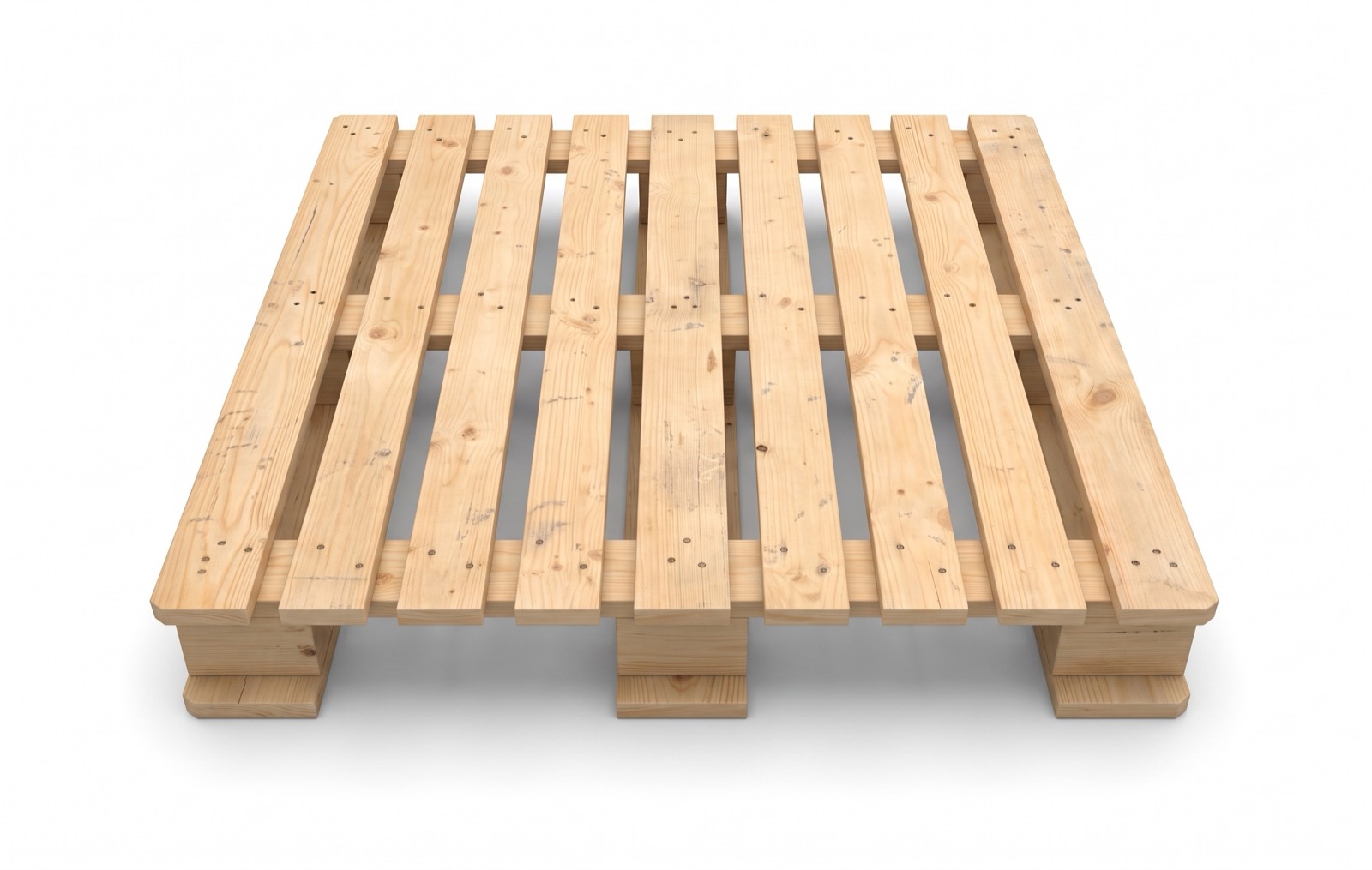
CP1 pallet
1000 × 1200 mm
General chemical-industry loads on the familiar 1200 × 1000 footprint.
View CP1 specification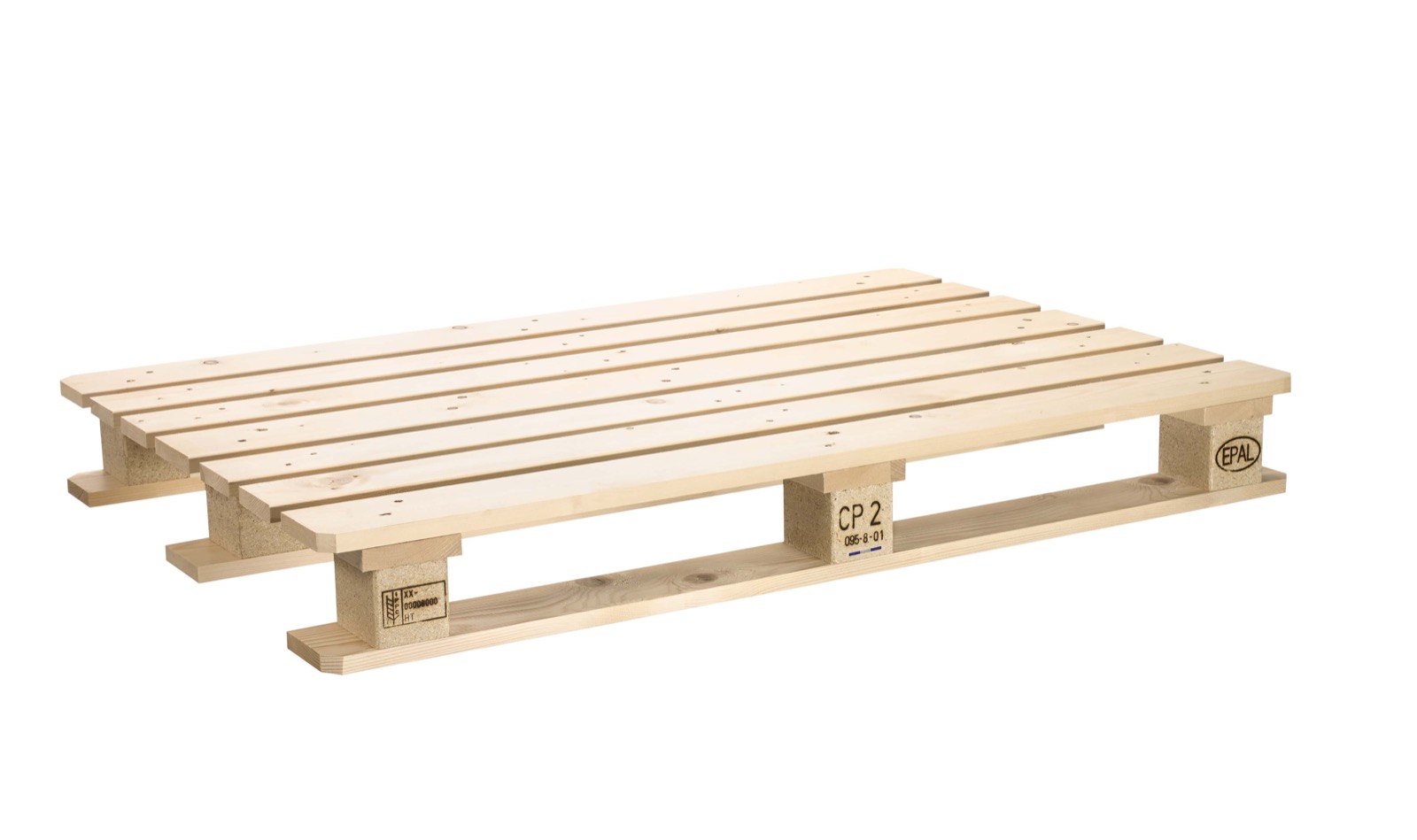
CP2 pallet
800 × 1200 mm
Chemical goods that need the 1200 × 800 Euro footprint.
View CP2 specification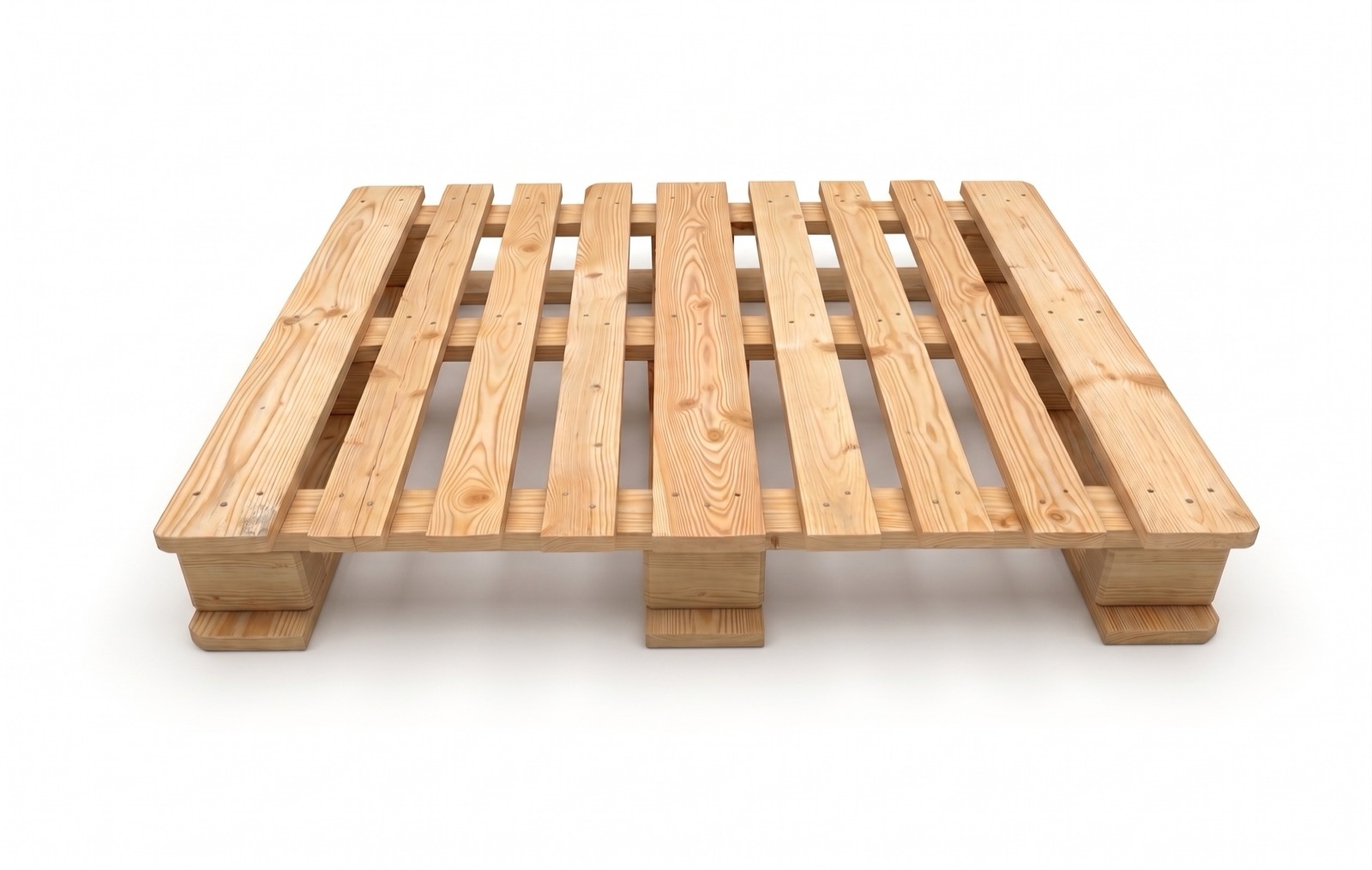
CP3 pallet
1140 × 1140 mm
Square chemical loads and efficient use of freight-container floor space.
View CP3 specification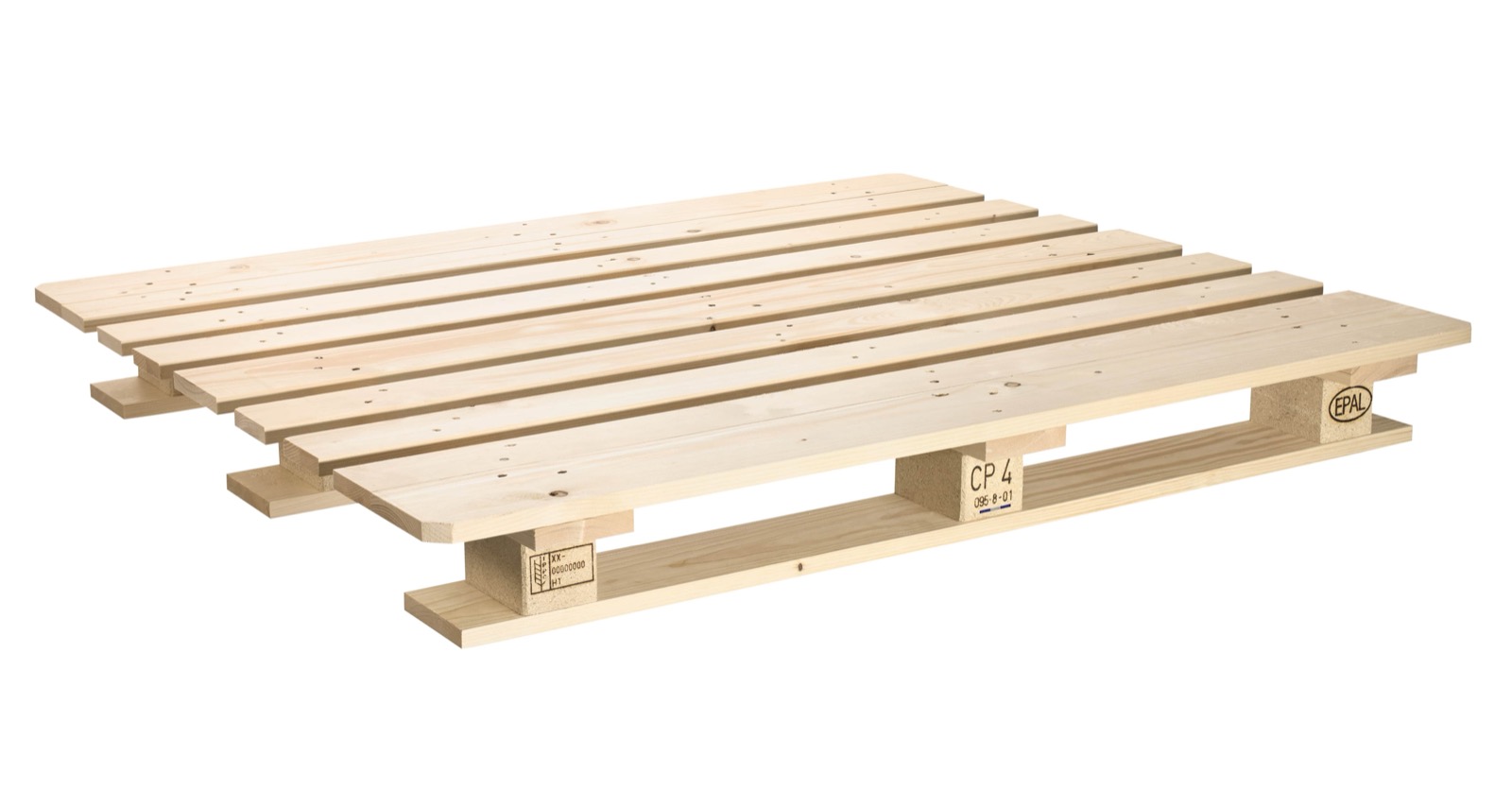
CP4 pallet
1100 × 1300 mm
Longer, wider bagged-goods loads specified on the 1300 × 1100 footprint.
View CP4 specification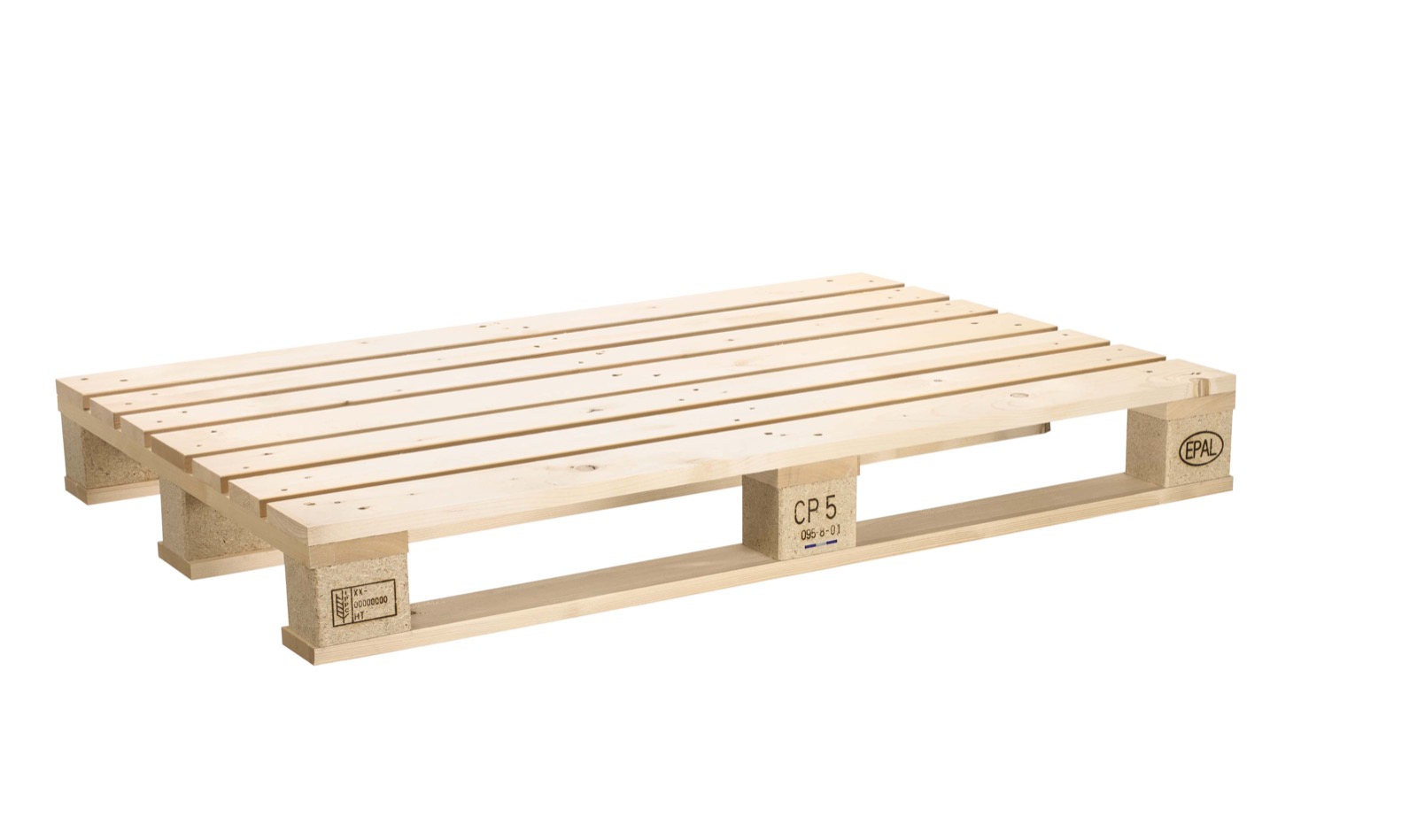
CP5 pallet
760 × 1140 mm
Narrow container-oriented loads where the 1140 × 760 footprint is specified.
View CP5 specification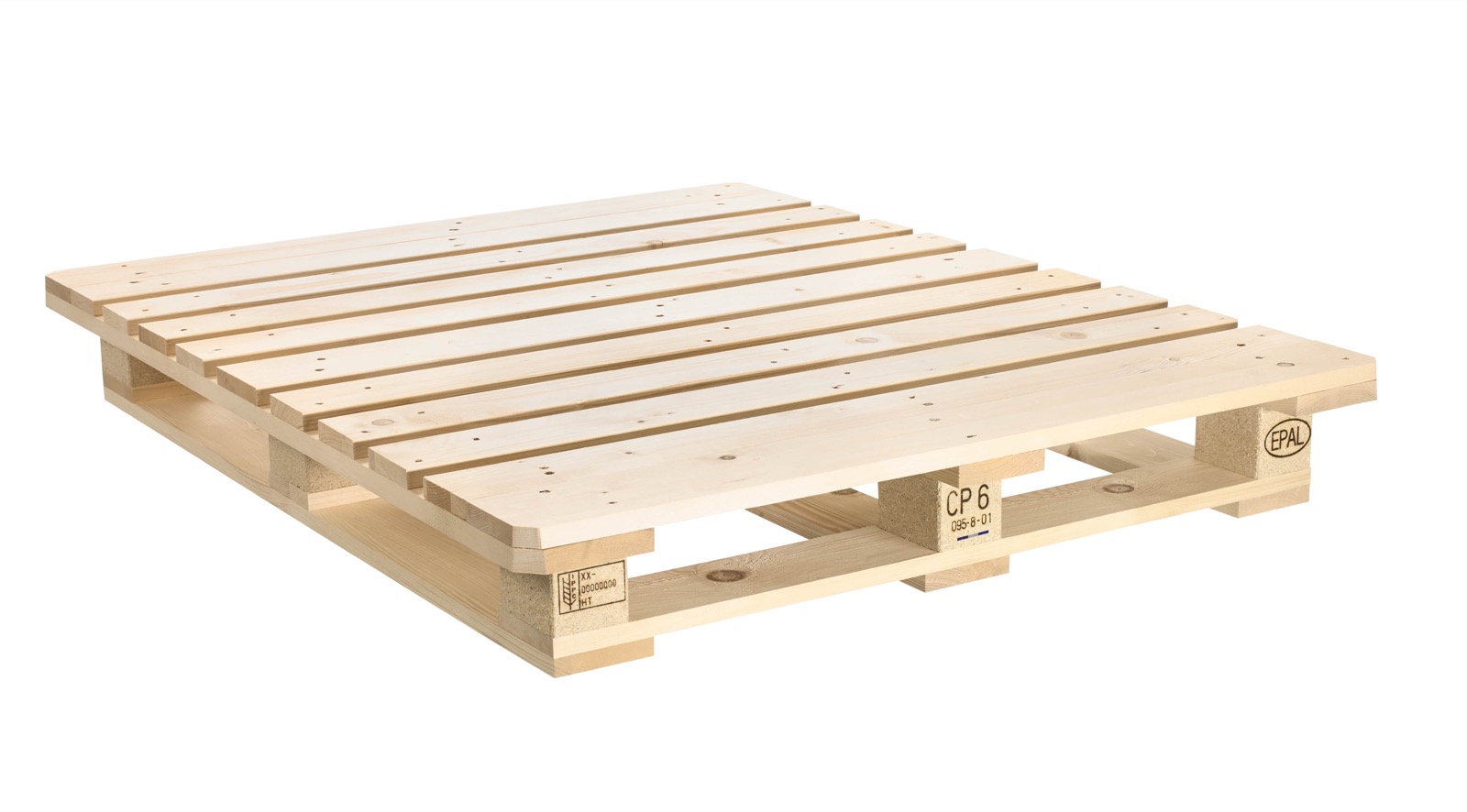
CP6 pallet
1200 × 1000 mm
Bagged bulk goods needing a framed base on a 1200 × 1000 footprint.
View CP6 specification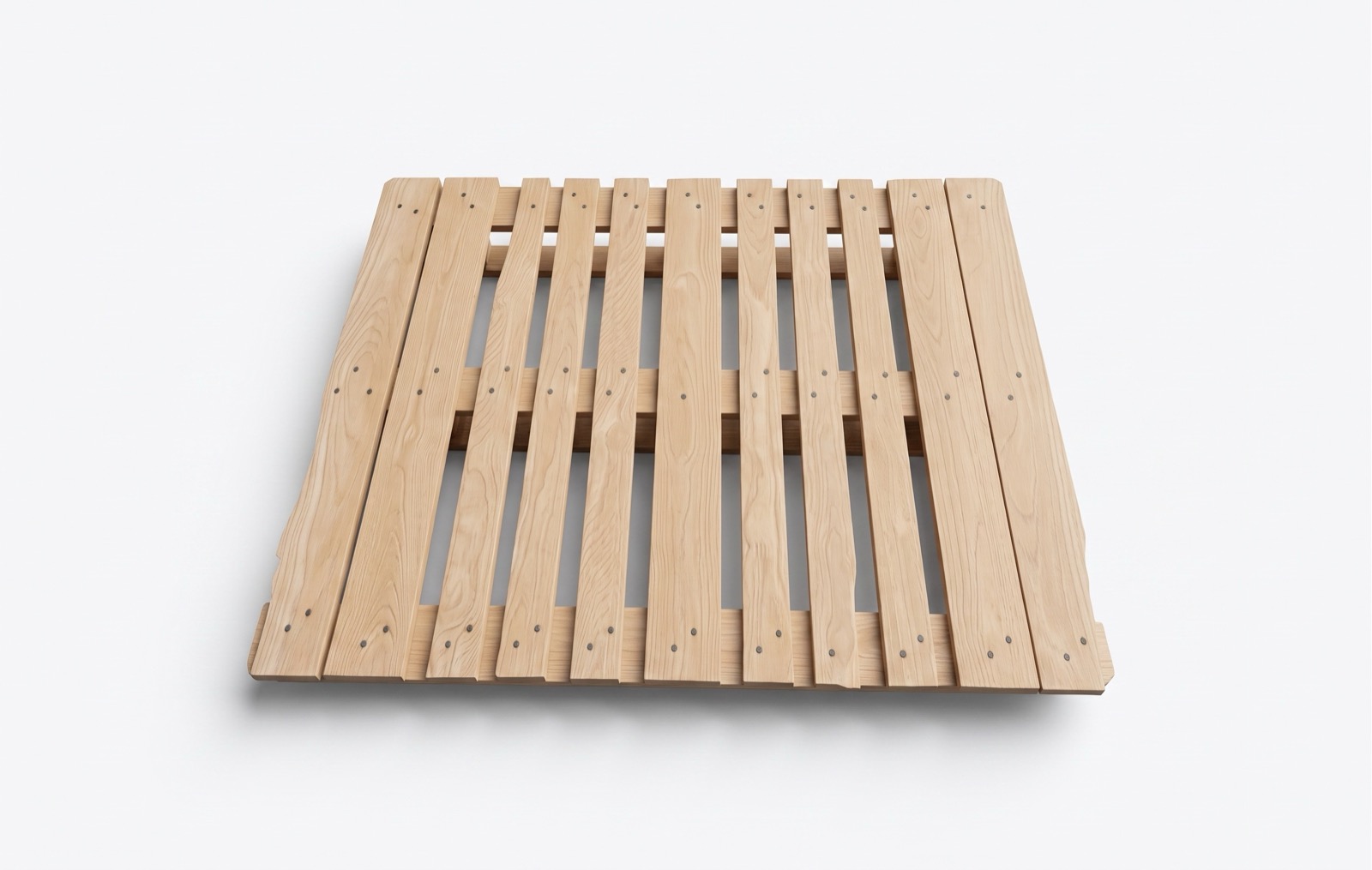
CP7 pallet
1300 × 1100 mm
Larger bagged bulk loads requiring a framed 1300 × 1100 base.
View CP7 specification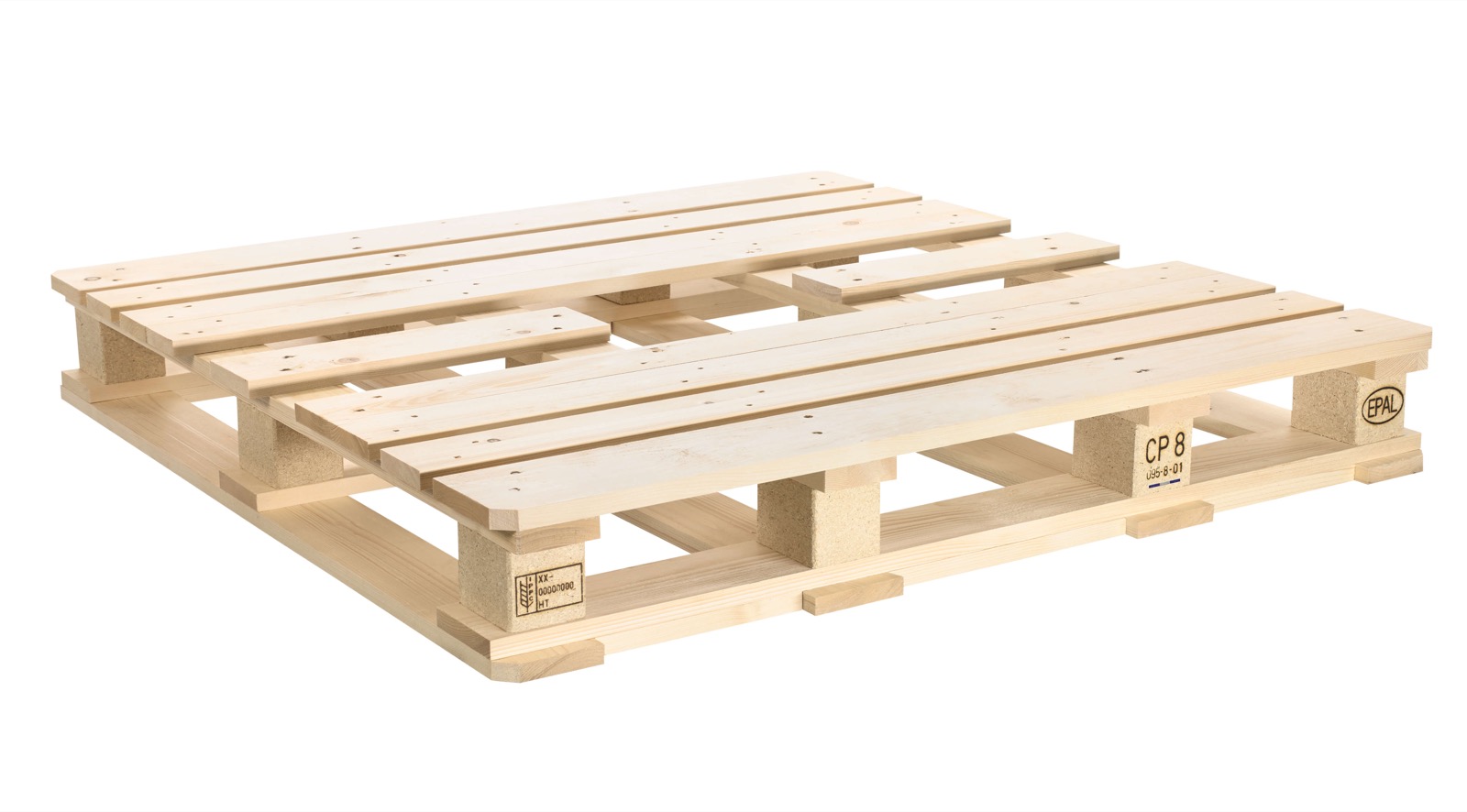
CP8 pallet
1140 × 1140 mm
Octabins and large containers whose contents discharge through the base.
View CP8 specification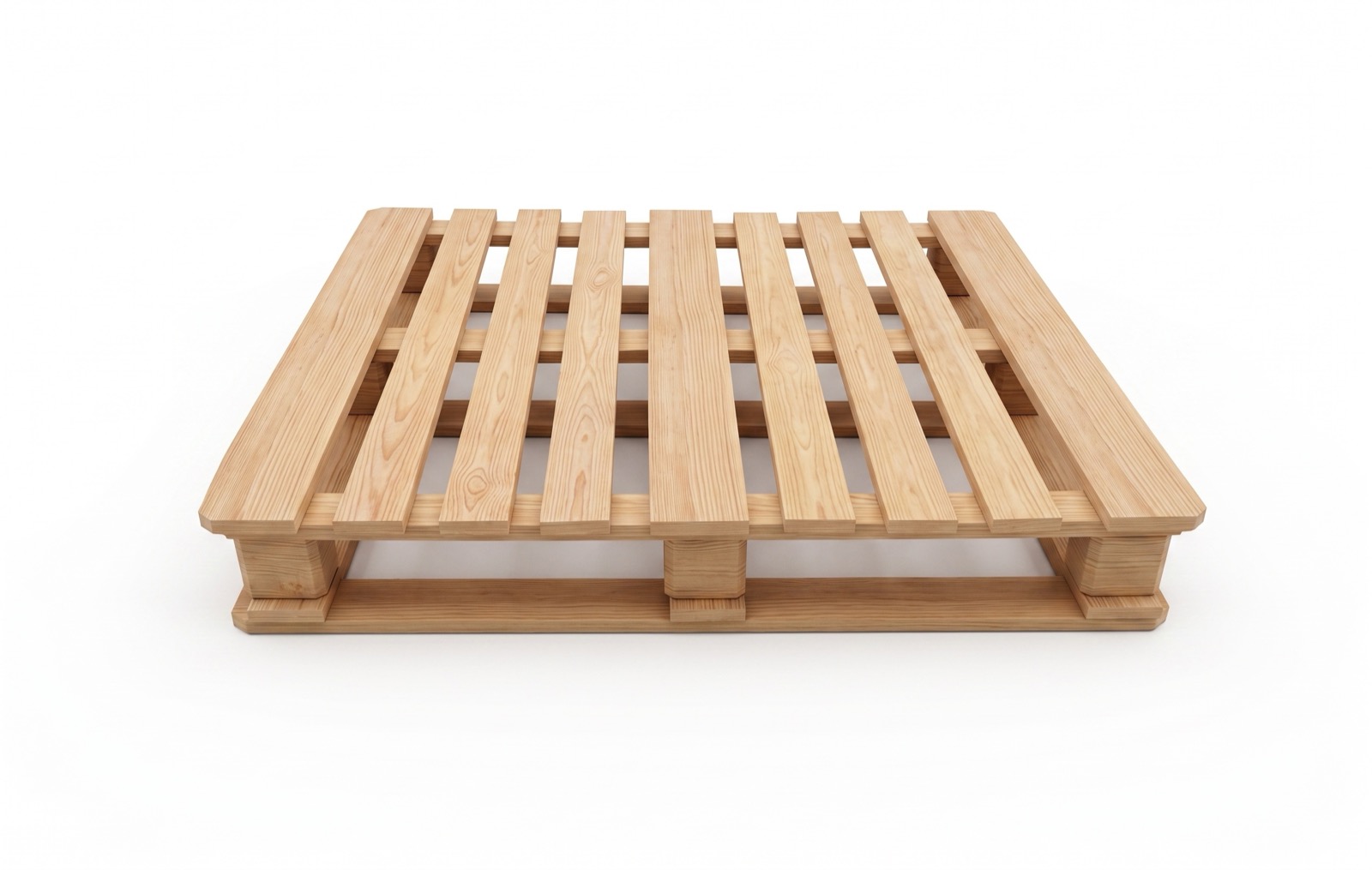
CP9 pallet
1140 × 1140 mm
Drums and flexible bulk containers needing a stable square perimeter base.
View CP9 specification
What the load figures mean
- Tare weight
- The mass of the empty pallet itself, before anything is put on it. It matters for vehicle payload, air freight and weighbridge figures, not for how much the pallet can carry.
- Static load
- The maximum load the pallet is rated to hold while standing still on a solid, level surface — the pallet fully supported underneath.
- Dynamic load
- The maximum load the pallet is rated to carry while it is being handled or moved, for example on forks or a pallet truck.
- Racking load
- The maximum load the pallet is rated to hold while supported only at its edges or on beams. It often differs from static and dynamic capacity and applies only in the exact rack or support configuration stated by the manufacturer.
Ratings depend on the exact construction, how the load is distributed, how the pallet is supported, its condition and the manufacturer. A rating can never be inferred from footprint alone: two 1200 × 800 mm pallets can behave completely differently. No load or tare figures are published on this page, because there is no single authoritative value for this kind of pallet. Tell us what the pallet has to carry and how it will be supported, and we will confirm the capacity and tare weight against the exact stock we would supply.
A CP number is not a load rating
The official EPAL and VCI subtype information defines footprint and construction for CP1 to CP9. It does not provide one generic tare, static or dynamic rating for each CP number, so no such figure appears here. We publish no third-party estimates either: an estimate attached to a CP number would be a guess about a pallet nobody has looked at.
Where a load figure matters, it has to be confirmed against the exact pallet we would supply — its construction, timber section, condition and how you support and load it. Tell us what the pallet has to carry and we will confirm it on the specific stock.
Confirm before we can quote a load figure
- Tare weight limit, where vehicle payload or air freight is tight.
- Whether you need a static, dynamic or racking figure — they are different numbers.
- Evenly distributed load or point load, and the footprint of the load on the deck.
- Support configuration: floor, beams, edge-supported racking, automation or conveyor.
- Condition required — new, repaired or used — and how many trips it must survive.
- Quantity, whether it repeats, and the delivery timing you need.
| Question | Why it decides the order | If you do not know |
|---|---|---|
| Which CP subtype? | The subtype fixes footprint and construction; substitution is not automatic. | Send a photograph and a tape measurement; we will identify it with you. |
| New or used? | Used stock in a named subtype is more constrained than new. | Say which your customer will accept — that usually settles it. |
| Export in scope? | Treatment is decided by the route, independently of the CP number. | Tell us the destination country and we will flag what to check. |
| One-off or ongoing? | Ongoing volumes can be planned; spot orders depend on what exists that week. | An approximate monthly figure is enough to start. |
Speak to a pallet specialist
Send a photograph or your customer's specification and we will tell you what is realistic, what we can source, and what needs confirming first.
Identify your pallet
Start from a CP number or a measurement
If your paperwork names a CP number, go straight to that page. If you only have a pallet to measure, find the footprint below. Several CP subtypes share a footprint, so size alone cannot tell you the subtype — and neither size nor CP number tells you whether a pallet suits your load, is in stock, is EPAL licensed or has been treated.
I know the CP number
I only know the footprint
1200 × 1000 mm
Shared by CP1 (three-runner base, 138 mm) and CP6 (perimeter (frame) base, 156 mm). Check the base, deck and height to tell them apart.
1200 × 800 mm
Only CP2 (three-runner base, 138 mm) among CP1–CP9, but a non-CP pallet can share this size.
1140 × 1140 mm
Shared by CP3 (three-runner base, 138 mm), CP8 (frame base, 156 mm) and CP9 (perimeter (frame) base, 156 mm). Check the base, deck and height to tell them apart.
1300 × 1100 mm
Shared by CP4 (three-runner base, 138 mm) and CP7 (perimeter (frame) base, 156 mm). Check the base, deck and height to tell them apart.
1140 × 760 mm
Only CP5 (three-runner base, 138 mm) among CP1–CP9, but a non-CP pallet can share this size.
What we ask before quoting
- The actual load: what it is, how it is packed and its maximum loaded weight.
- Handling and support: forklift, pallet truck, conveyor, racking or floor stacking.
- Destination and any export requirement, including whether goods leave Great Britain.
- Your customer's specification or drawing, or clear photos of the pallet with a tape measure visible.
- Whether this is one order, a recurring account requirement or supply to several sites.
For writing it down, see how to specify a pallet; for goods leaving Great Britain, including to the EU, see ISPM15 explained and export pallets. Recurring or multi-site CP demand is handled through account supply.
Opens the pallet supply enquiry. Choose “CP pallet” and add the subtype in the form.
Related
Work out the specification
- Pallet specificationsHow to write a specification a supplier can price.
- ISPM15 explainedWhen treatment applies, and what the mark means.
- Pallet sizes and dimensionsFootprints in UK and European use.
- Plastic palletsWhere a non-timber pallet is the better answer.
- Procurement and account supplyRecurring or multi-site CP demand on one account.
- UK-to-EU pallet movementsWhat changes when CP-palletised goods leave Great Britain.