
Pallet supply
Used pallets: clean, graded and ready to work
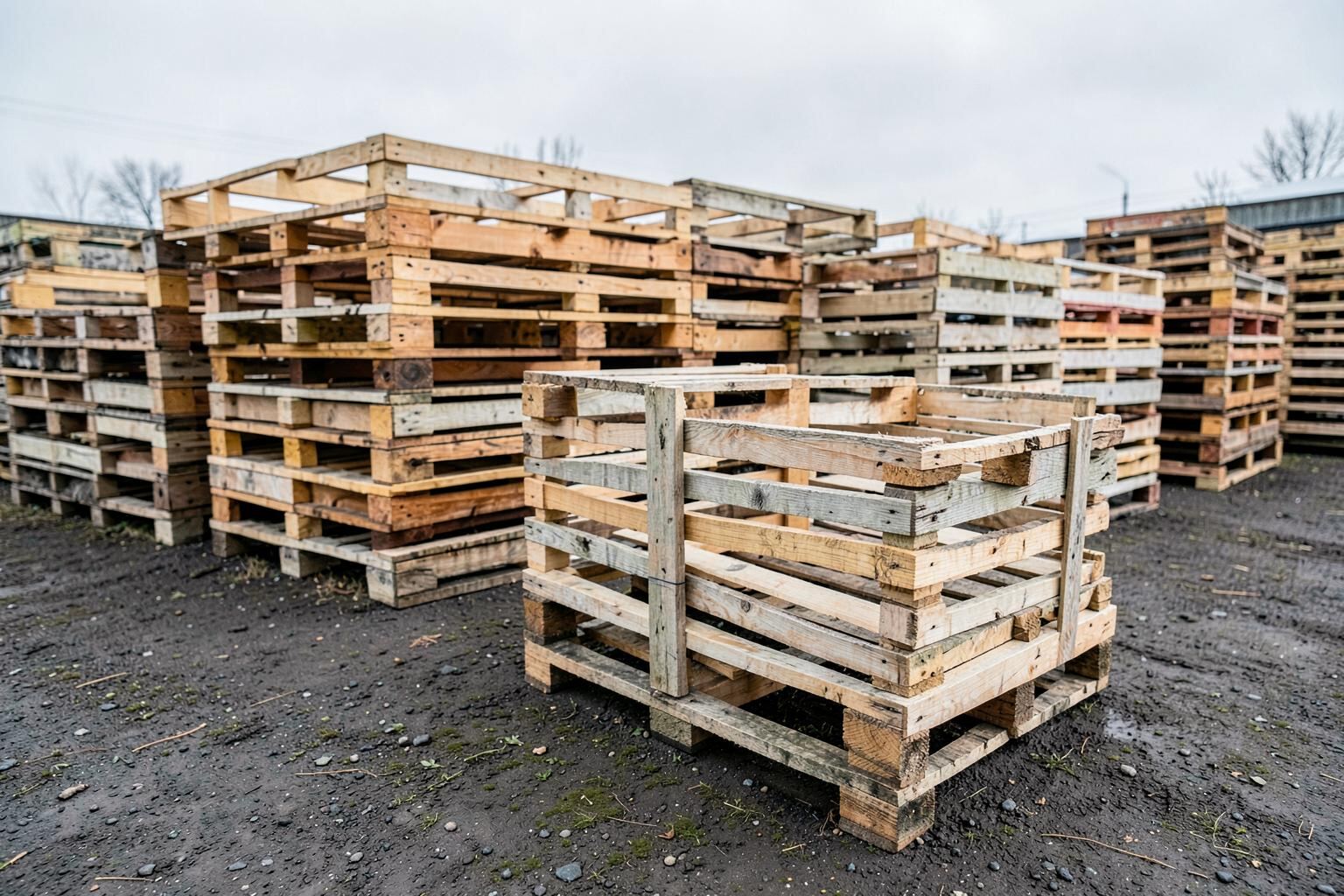
Our used pallets are clean, serviceable stock, checked and graded before they go out — not worn-out timber. We supply reusable, repaired and mixed stock to a written specification, so you get the right category for your operation.
Stock categories
Choose the right used pallet category
Used pallets fall into a few clear categories. Naming the one you need is the fastest way to get an accurate quote.
| Category | What it is | What it means for you |
|---|---|---|
| Reusable used | Pallets removed from a supply chain, sound enough to go straight back into service. | Cost-effective where cosmetic variation is acceptable. Consistency depends on the source. |
| Repaired / reconditioned | Pallets that have had damaged boards, blocks or bearers replaced before re-issue. | More consistent than raw used stock; the repair standard is agreed in writing. |
| Mixed | Pallets of assorted footprints and constructions collected together. | Suits one-off or low-demand use, not racking, automation or customer-specified loads. |
| Pooled (CHEP/LPR/IPP) | Operator-owned hire stock. | Not for sale — pooled pallets remain the property of their operator and are returned to them, never supplied on. |
What to tell us for a quote
Footprint and construction. A measured sample gets you an accurate quote faster than a remembered size.
Handling and storage. Beam racking, block stacking, automated wrapping, conveyors and narrow-aisle trucks each suit a different build.
Condition tolerance. What is acceptable cosmetically, and what is not acceptable structurally — easiest to agree with sample photographs.
Volume and frequency. One-off, bulk, recurring and account supply are all available; a realistic forecast helps us keep availability consistent.
Collection alongside supply. Many accounts run closed-loop: pallets delivered in, surplus and damaged stock collected on the same visit.
Delivery
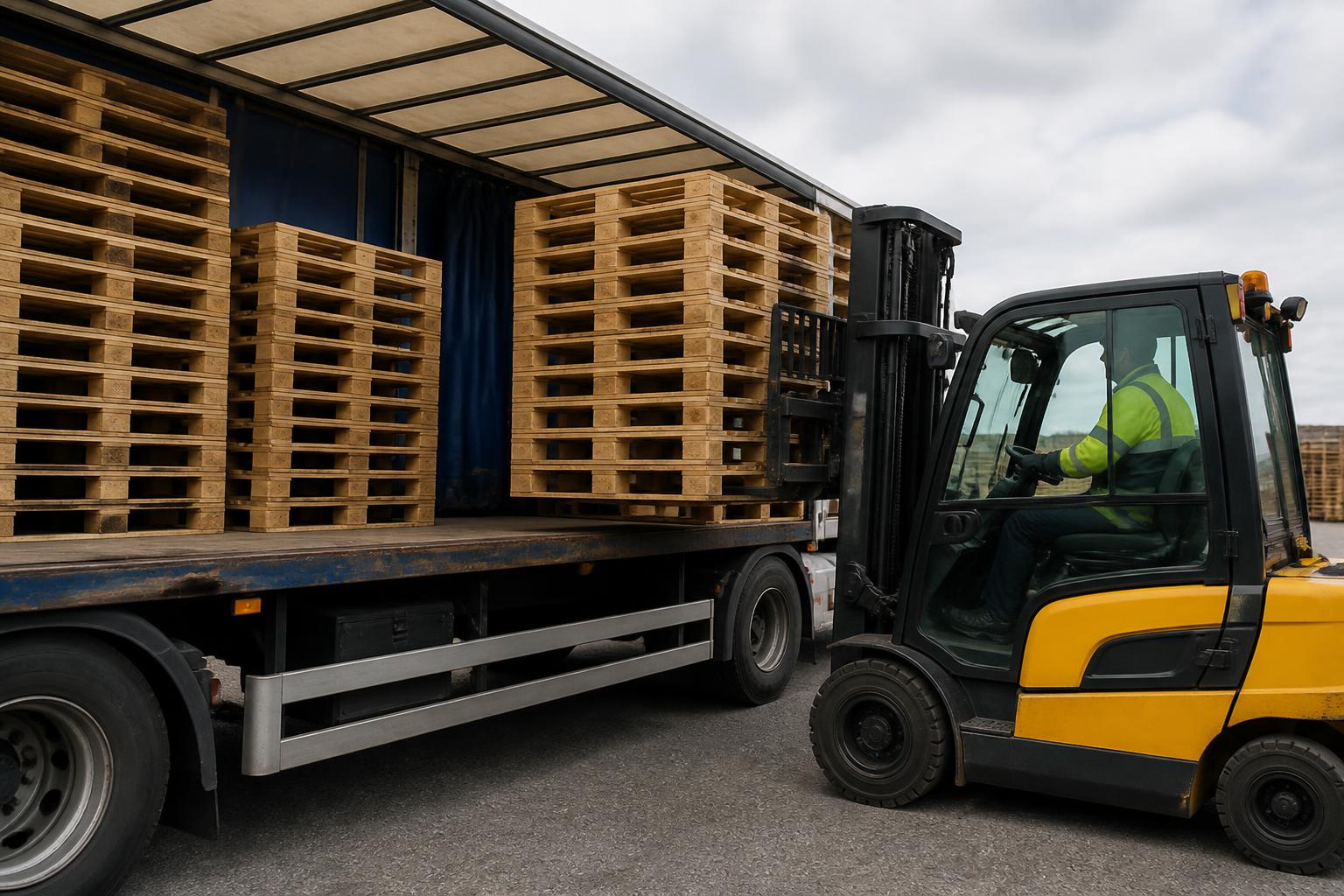
Same-day delivery may be available for orders placed before 10am, subject to stock, vehicle availability, order size and destination, confirmed on the call. We also offer next-day and planned delivery for regular volumes.
Typical specification
- Common footprints
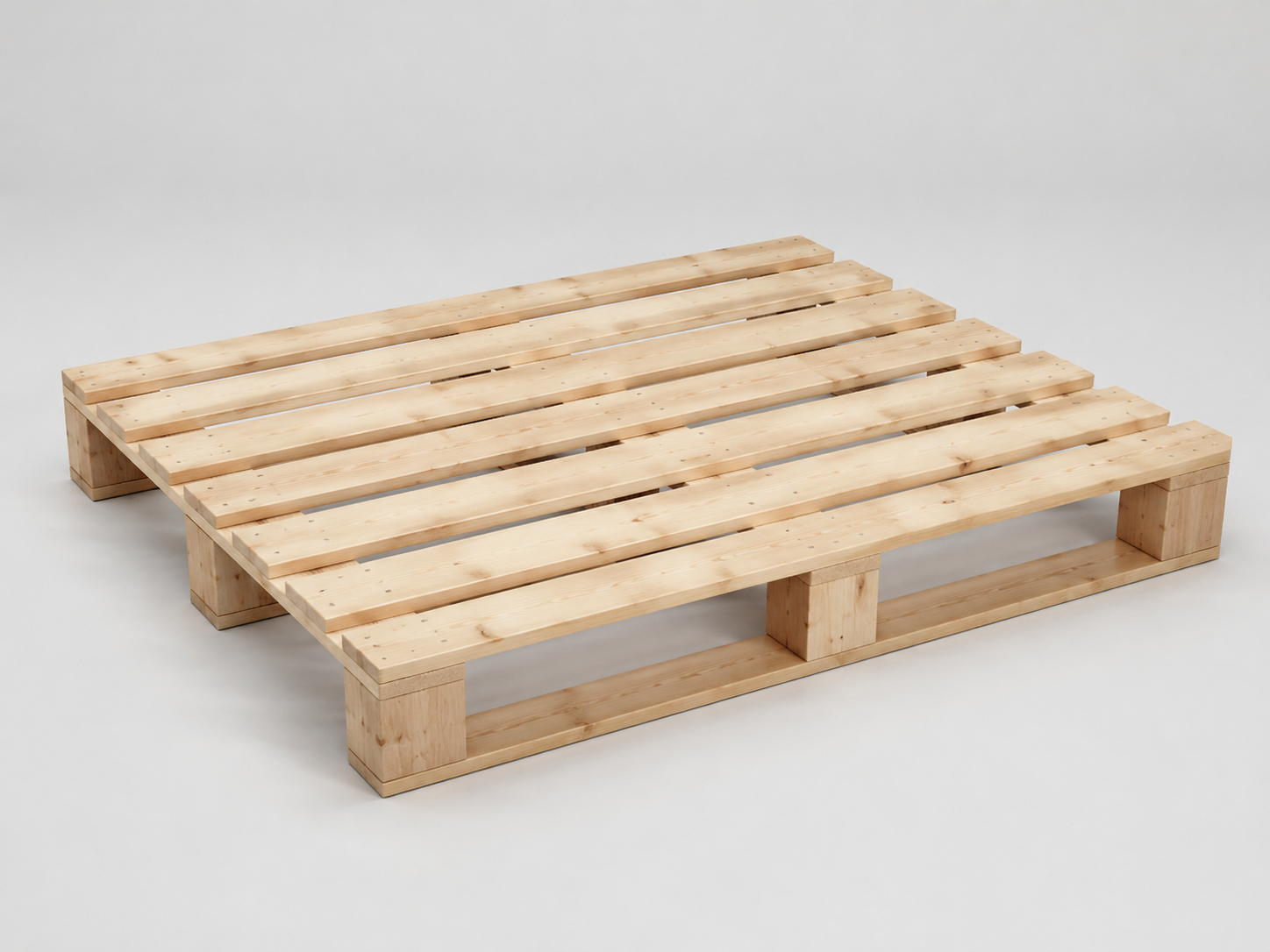
- UK standard 1200 × 1000 mm and Euro footprint 1200 × 800 mm (width × length)
- Condition
- Used and repaired, graded on inspection
- Entry
- Two-way or four-way, depending on the pallet supplied
- Construction
- Timber stringer or block, as inspected
- Treatment and marking
- Decided by the destination, not by the footprint
Grade, quantity, load suitability, availability and price are confirmed against the physical stock when we quote. Other footprints appear from time to time — tell us what you measured.
Send this with your enquiry
- Measured footprint of a sample pallet, in millimetres.
- Photographs of the top deck, underside and one side elevation.
- How the pallet is stored and handled on site.
- Approximate weekly or monthly quantity, and any seasonality.
- Whether export use is in scope for any part of the volume.
- Whether you also have surplus or damaged pallets to move.
What the load figures mean
- Tare weight
- The mass of the empty pallet itself, before anything is put on it. It matters for vehicle payload, air freight and weighbridge figures, not for how much the pallet can carry.
- Static load
- The maximum load the pallet is rated to hold while standing still on a solid, level surface — the pallet fully supported underneath.
- Dynamic load
- The maximum load the pallet is rated to carry while it is being handled or moved, for example on forks or a pallet truck.
- Racking load
- The maximum load the pallet is rated to hold while supported only at its edges or on beams. It often differs from static and dynamic capacity and applies only in the exact rack or support configuration stated by the manufacturer.
Ratings depend on the exact construction, how the load is distributed, how the pallet is supported, its condition and the manufacturer. A rating can never be inferred from footprint alone: two 1200 × 800 mm pallets can behave completely differently. No load or tare figures are published on this page, because there is no single authoritative value for this kind of pallet. Tell us what the pallet has to carry and how it will be supported, and we will confirm the capacity and tare weight against the exact stock we would supply.
Confirm before we can quote a load figure
- Tare weight limit, where vehicle payload or air freight is tight.
- Whether you need a static, dynamic or racking figure — they are different numbers.
- Evenly distributed load or point load, and the footprint of the load on the deck.
- Support configuration: floor, beams, edge-supported racking, automation or conveyor.
- Condition required — new, repaired or used — and how many trips it must survive.
- Quantity, whether it repeats, and the delivery timing you need.
Two ways to buy pallets
Also useful: Pallets Direct
Prefer to browse products, check stock and order online? Pallets Direct is our sister site for product-led pallet buying. Palletmove supplies pallets directly too, and handles contract and account supply, specification work and combined collection, recovery and supply — call us and we will quote it.
Visit Pallets Direct (opens in a new tab)
Continue
Related supply and guidance
- Business pallet supplyThe account supply hub and how the relationship works.
- UK 1200×1000 footprintWhy 'UK standard' is a footprint, not a specification.
- Pallet grades explainedWhat grading language does and does not guarantee.
- Procurement and account supplyRunning pallet supply inside a procurement process.
- Pallet CheckerRoute your requirement in a few questions.
- Talk to PalletmoveSend a sample photograph and measurements.
Get a quote for used pallets
Tell us footprint, volume, handling method and condition tolerance. Call 0330 107 0944.