
Knowledge Centre — grades, sizes & procurement
Pallet grades explained, and why the letter is the least useful part
There is no single UK grading standard for used pallets. Grade names are supplier conventions, they differ between yards, and two invoices reading "grade B" can describe visibly different stock. The definition is what you are buying.
Published by Palletmove. Last reviewed: 3 September 2026. This is guidance on grading language, not a grade equivalence table. Our grading won't necessarily match another supplier's letters, so where grade matters, agree the definition in writing with whoever is actually delivering.
What grading language usually means
The common conventions, and their limits
These are the terms you will encounter. They are described here as conventions in general use, not as definitions Palletmove applies to its own stock without written agreement.
| Term in common use | Roughly indicates | What it does not fix |
|---|---|---|
| New | Built from new timber and not previously used in a supply chain. | Construction, footprint tolerance, treatment or marking — all still specified separately. |
| Grade A / premium used | Used stock selected for good appearance and structural soundness. | How 'good appearance' is judged, and whether repairs are permitted within it. |
| Grade B / standard used | Sound but visibly used stock, often with repairs and cosmetic damage. | The damage threshold — which is exactly where disputes happen. |
| Reconditioned / repaired | Damaged components replaced before re-issue. | The repair standard: how many boards, what timber, what fixings. |
| Mixed / assorted | Unsorted stock of varying footprints and constructions. | Essentially everything. Suitable only where consistency does not matter. |
Define condition by failure, not by letter
The most reliable specifications describe what is unacceptable rather than what is acceptable. "No missing or split top deck boards in the centre third", "no protruding fixings on the deck face" and "must not rock when placed on a flat floor" are all checkable at goods-in by someone who has never seen a grading chart. A letter is not.
The second most reliable technique is photographic. Agree one photograph of an accepted pallet and one of a rejected pallet, and attach both to the account. That pair settles more arguments than a page of prose.
Grade is not condition on arrival
Grading describes stock at the point it leaves a yard. Weather exposure, double handling and poor load restraint all change what arrives. If pallets are stored outdoors at either end, say so, because it changes what a realistic condition tolerance looks like and it changes how quickly stock deteriorates in your yard.
Grade says nothing about compliance
A high grade does not indicate plant-health treatment, does not imply an ISPM15 mark, and has no bearing on packaging regulation. It also does not change ownership: pooled operator stock is not a grade of used pallet, it is somebody else's property, and it stays outside grading conversations entirely.
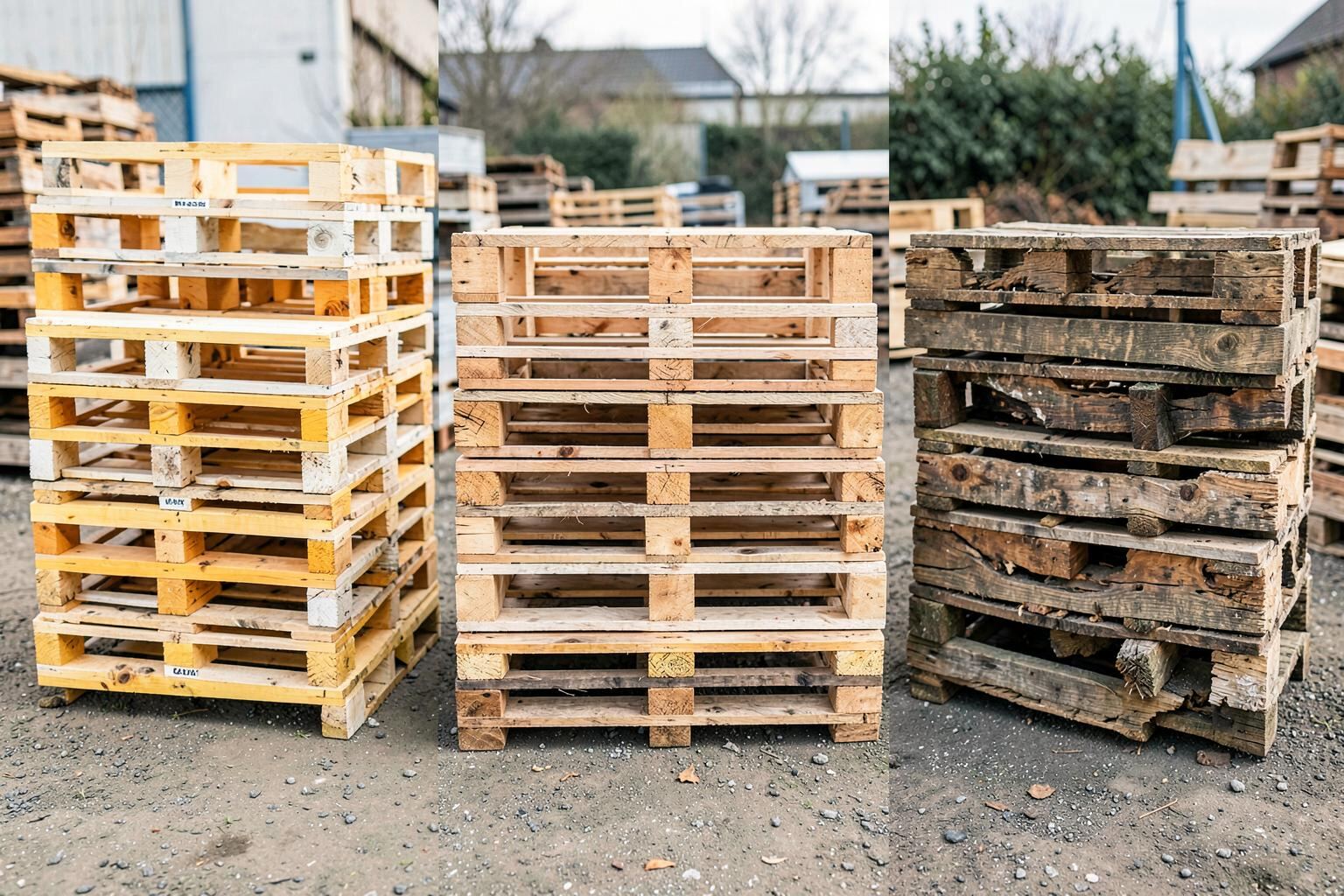
Agree this in writing
- The supplier's grade definition, in their words, on the account record.
- A photograph of an accepted pallet and a rejected pallet.
- Whether repairs are permitted, and to what standard.
- The goods-in check your team will actually perform.
- What happens to rejected pallets, and who moves them.
- Whether outdoor storage is involved at either end.
Continue
Apply this to a requirement
- Used pallet supplyReusable, reconditioned, mixed and controlled stock compared.
- Pallet specificationsThe five attributes of a usable specification.
- Pallet sizes and dimensionsFootprints, measurement and what they leave open.
- Identifying pooled palletsWhy operator stock is never a grade.
- We buy surplus palletsHow condition is assessed when stock is going the other way.
- Talk to PalletmoveSend photographs and we will describe what you have.
Turn a grade letter into a real specification
Send photographs of what you accept and what you reject, and we will write the condition tolerance down with you.