
Knowledge Centre — unwanted, surplus & pooled pallets
How to identify pooled pallets on your site
Pooled pallets look like ordinary stock until you know what to look for — and treating them as ordinary stock is one of the most common and most expensive mistakes a warehouse team can make.
Published by Palletmove. Last reviewed: 3 September 2026. General operational guidance only. Return procedures, account arrangements and any charges are set by each pooling company — check them with the operator or your own contract.
What a pooled pallet actually is
A pooled pallet is rented, not sold. The pooling operator owns the pallet for its whole life, issues it into circulation, and expects it back. Your site may be holding it perfectly legitimately — it arrived under a load — but holding it does not make it yours to sell, scrap, repair or hand to a third party.
That is why pooled pallets are excluded from any surplus purchase. They are not stock. They are someone else's asset temporarily on your premises.
Pooled pallets stay the operator's property at all times. Do not buy them, sell them, repair them for resale, dismantle them or scrap them. Segregate them and arrange return or collection through the relevant pool operator, or ask Palletmove to separate them during a collection or clearance.
Three operators you can recognise on sight
The photographs below are published by each operator on its own product page and are reproduced here as identification aids so your team can spot pooled stock before it reaches the surplus stack.
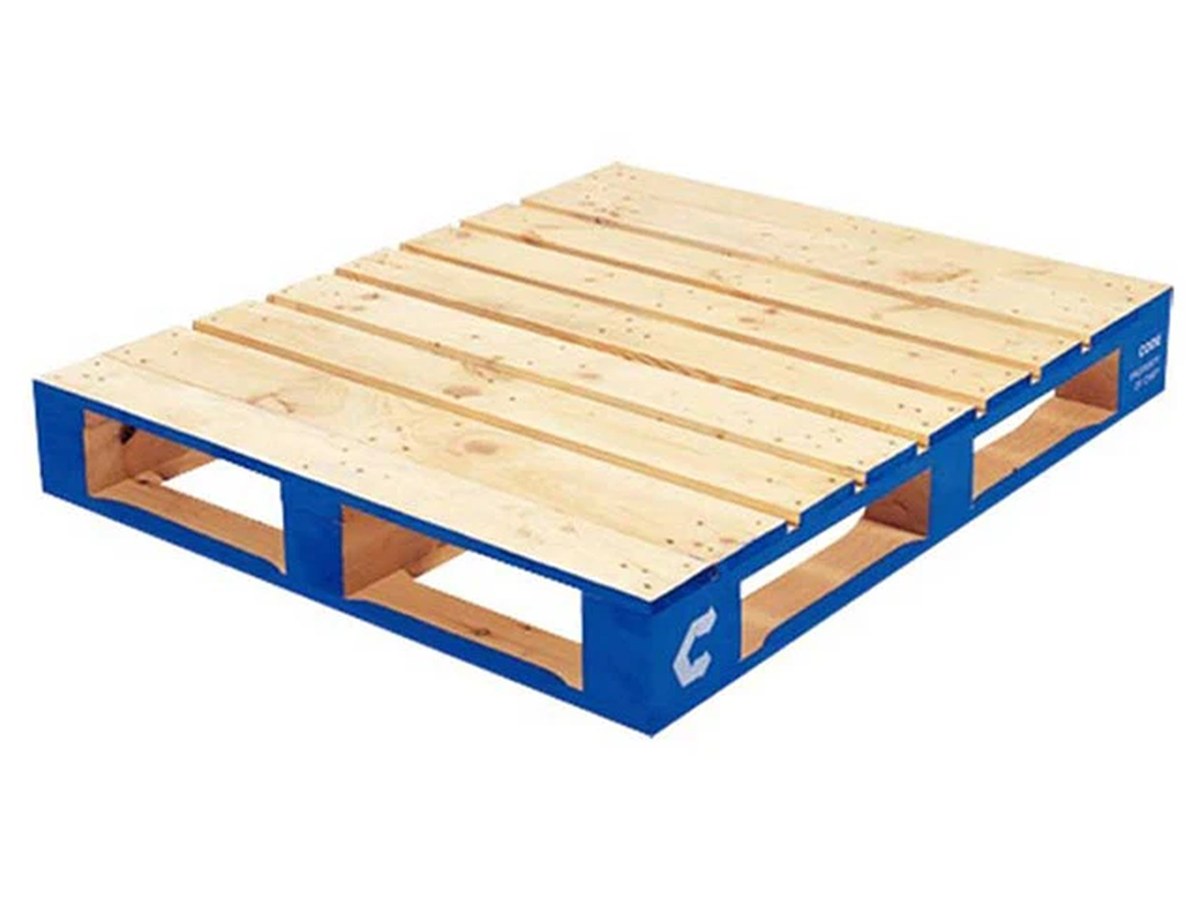
Blue
CHEP pooled pallet
The all-over blue paint on the blocks and bearers is the first clue — ordinary white-wood pallets are never painted.
Confirm it by looking for the CHEP name or a “Property of CHEP” mark branded on the blocks or stringer faces.
Image source: chep.com
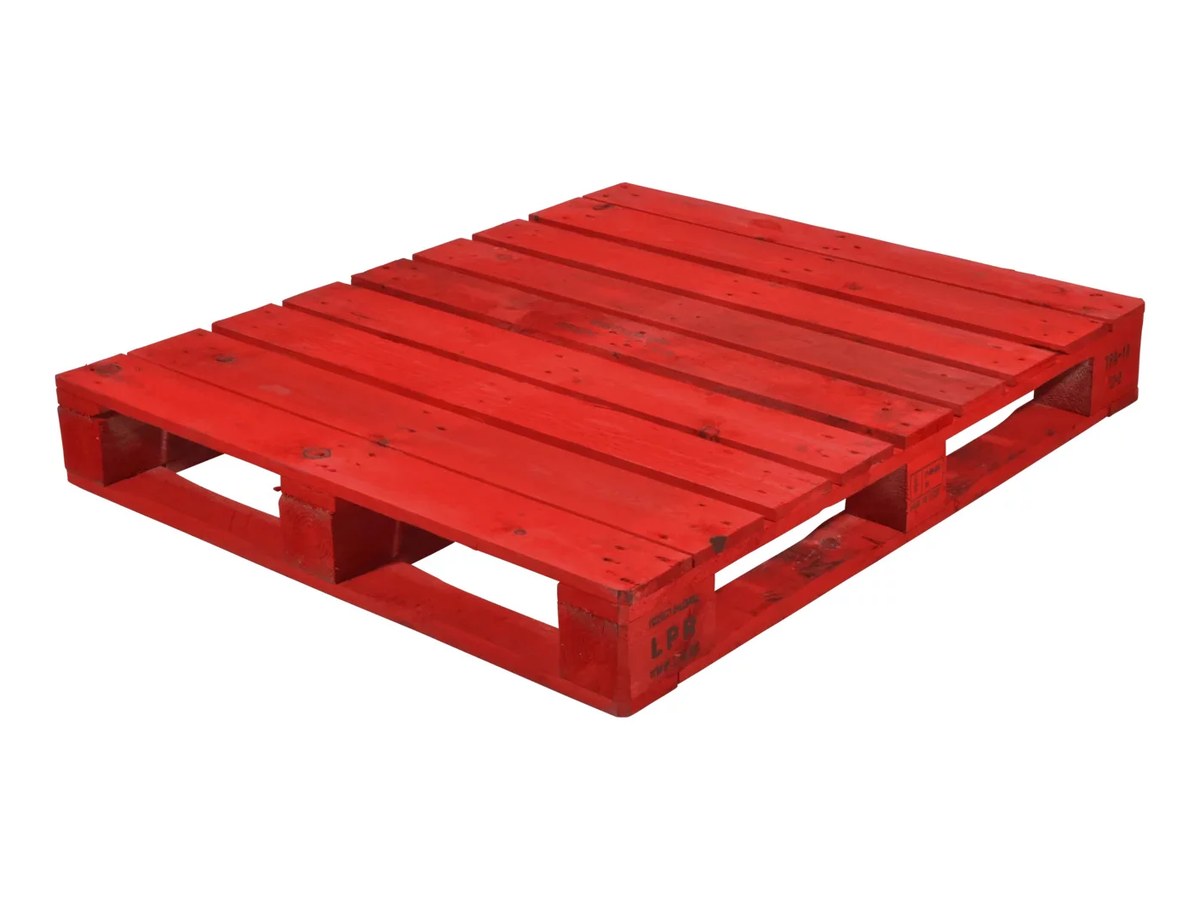
Red
LPR pooled pallet
LPR's distinctive red paint covers the whole pallet, so a red pallet in a stack should be pulled out and checked.
Confirm it by looking for LPR or La Palette Rouge branded on the blocks or the outer stringer boards.
Image source: lpr.eu
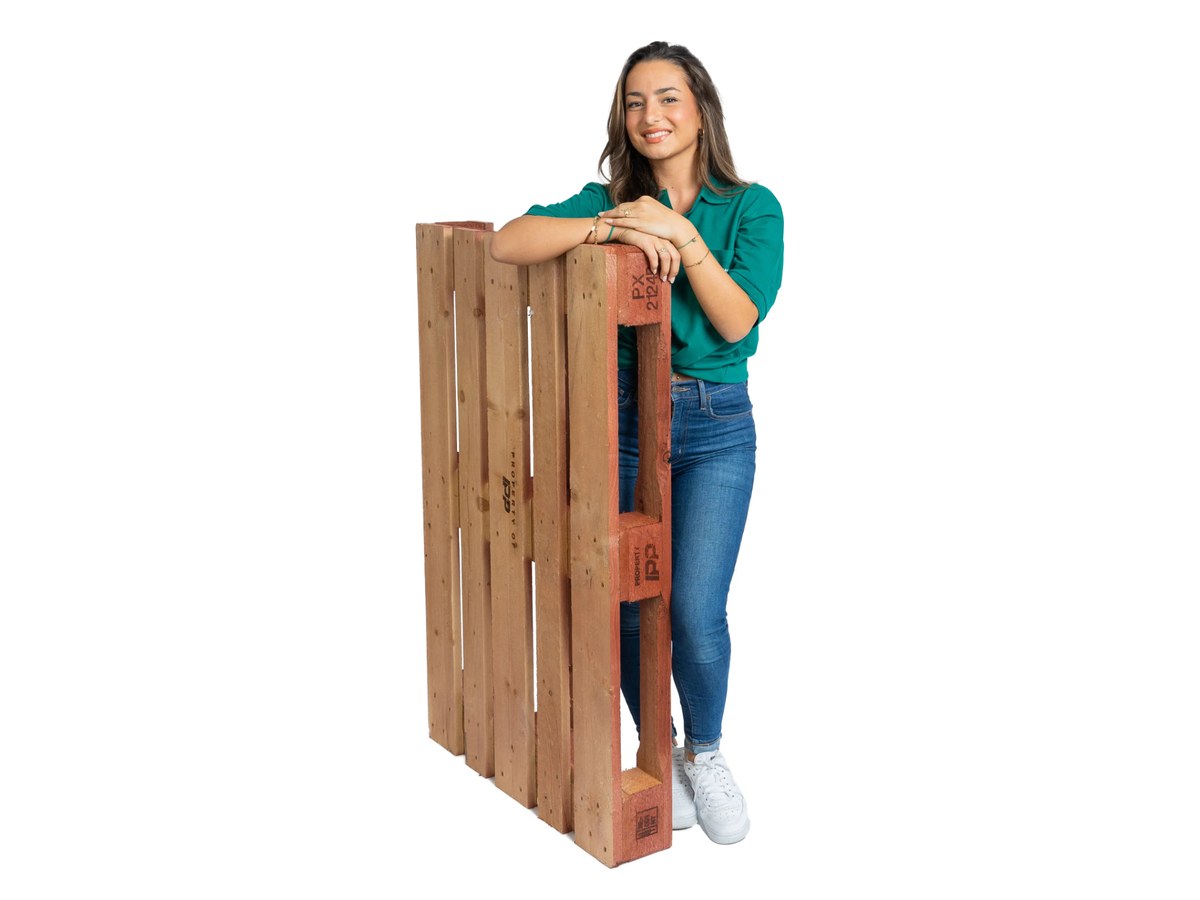
Brick brown
IPP pooled pallet
IPP stock is finished in a brick-brown colour that is easy to mistake for plain timber, so look closely at any pallet with an even reddish-brown tone.
Confirm it by looking for IPP, “Property of IPP” or “Property IPP Logipal” branded on the blocks.
Image source: ipp-pooling.com
Colour is a first clue, not the decision.
Paint fades, gets dirty and is sometimes found on pallets that are nothing to do with a pooling network. The ownership stamp or branding on the blocks and stringer faces is the decisive check — if you cannot find one, treat the pallet as pooled until you can prove otherwise.
What to look for
- Colour. Distinct all-over colouring is the clearest first signal, because ordinary white-wood pallets are not painted.
- Branding. Operator names and logos are usually branded or printed on the blocks or stringer faces.
- Consistent construction. Pooled pallets are built to a controlled specification, so a stack of them looks uniform in a way that mixed white-wood stock does not.
- Condition. Pooled stock is repaired and re-issued by the operator, so it often looks better maintained than surrounding pallets.
The operators you are most likely to see
The marks below identify third-party pooling systems so your team can recognise them. They are not accreditations, partnerships or endorsements of Palletmove, and each mark remains the property of its owner.


What to do when you find them
- Stop them entering the general surplus stack.
- Segregate them by operator, so a return can actually be arranged.
- Contact the relevant pooling operator directly to arrange collection through their own network.
- Record what you are holding. Accumulated pooled stock can carry charges, and a count is the only defensible starting point for any discussion.
- If you cannot establish where a pallet came from, treat it as pooled until proven otherwise.
How Palletmove handles them
During collection, clearance or a surplus assessment we identify pooled and branded pallets and separate them rather than removing them as stock. We do not buy them, sell them or absorb them into a recycling stream. Where a site has a significant accumulation, we will flag it so you can raise it with the operator concerned.
Not sure what is in your stack?
Send photographs of the pallet faces and markings and we will tell you what we can identify.