
Knowledge Centre — unwanted, surplus & pooled pallets
Blue and red pallets: what they are and what you can do with them
"Can we sell these blue ones?" is one of the most common questions warehouse teams ask. The short answer is almost always no — and the reason is ownership, not quality.
Published by Palletmove. Last reviewed: 3 September 2026. Return procedures, hire terms and any charges are set by each pooling company direct — check them with the operator concerned.
Why colour matters
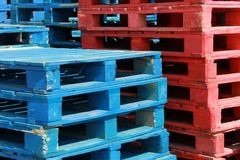
Ordinary timber pallets — the ones commonly called white wood — are not painted. Painting a whole pallet costs money and only makes commercial sense if the pallet is going to be tracked, recovered and re-issued many times. That is exactly what a pooling operator does, which is why strong, uniform colour is such a reliable signal that a pallet is rented, not owned outright.
Colour alone is not proof, and the same colour is not exclusive to a single operator worldwide. Always read the branding on the blocks or stringers before concluding who a pallet belongs to.
What this means in practice
- They are not saleable. A pooled pallet stays the property of its operator, so it cannot be sold to us or to anyone else.
- They should not be scrapped. Chipping or skipping another company's asset can create a liability instead of removing one.
- They should not be repaired locally. Pooled stock is repaired within the operator's own controlled system.
- They should not sit in the yard. Accumulation can attract charges and always occupies space you are already short of.
The correct route off site
Segregate the coloured pallets, count them, identify the operator from the branding, and arrange a return through that operator's own network. If your site regularly receives pooled pallets it is usually worth setting up a standing return arrangement rather than dealing with each build-up as an incident.
We identify and separate pooled stock during any collection, clearance or surplus assessment, so it never gets mixed into the pallets we buy or handle.
Send a photo and we will tell you what it is
Close-ups of the blocks and stringer faces are usually enough to identify a pooled pallet.