
Services
Pallet clearance for sites that have run out of room
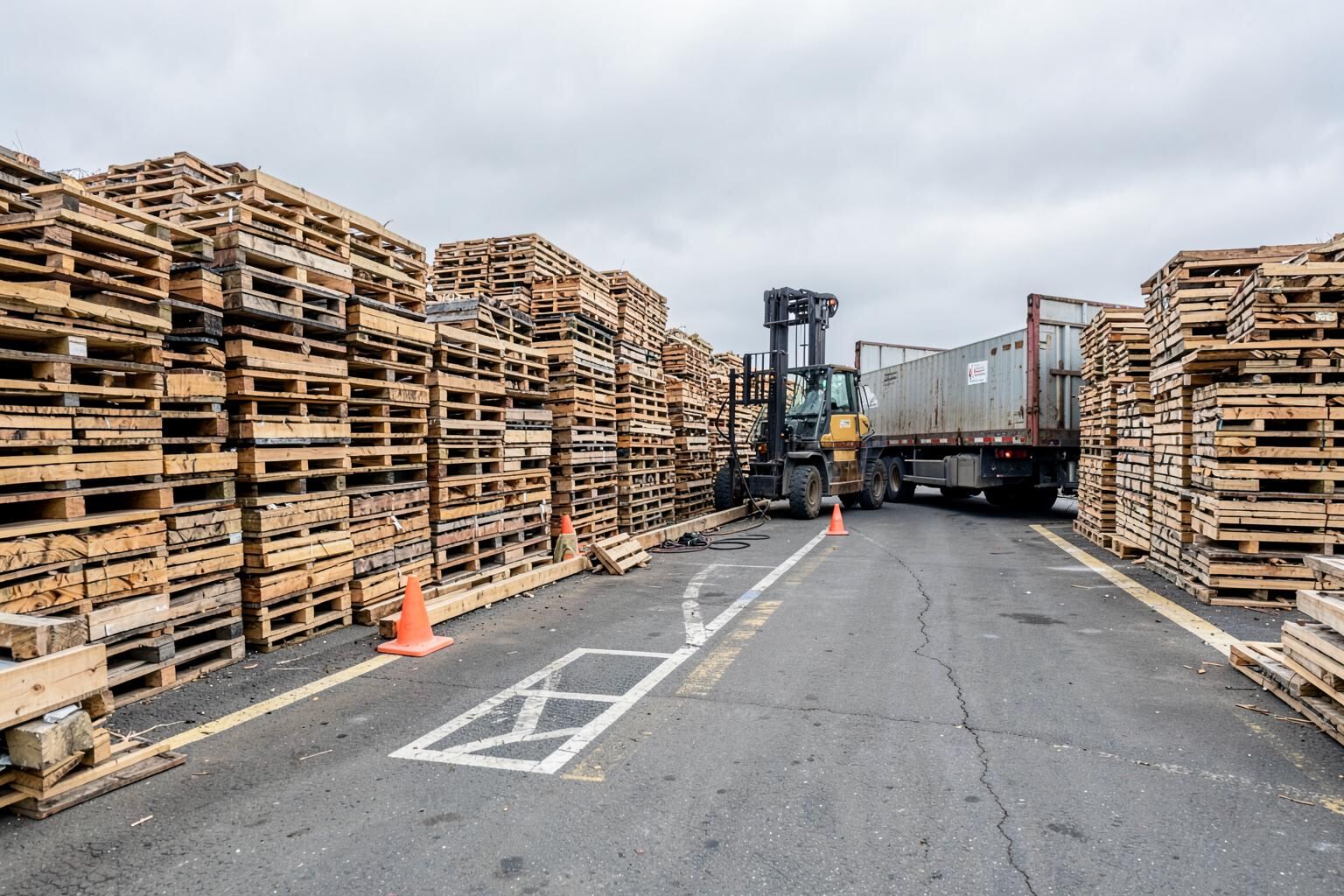
A clearance is a one-off, planned operation: a defined backlog of pallets removed in a controlled way, with the yard, bay or compound handed back usable.
When to book a clearance
For backlogs, not day-to-day volume
Scheduled collection keeps a steady flow under control. Clearance deals with what has already built up — usually ahead of an audit, an insurance review, a site move or a landlord inspection.
A backlog is rarely uniform. It typically mixes reusable stock, broken timber, pallets belonging to pooling operators and pallets nobody can account for. We sort it as we clear it, because what is in the stack determines the cost and the right destination for each part of it.
Stored timber close to buildings can also block access routes and add fire loading, so we plan the sequence around those constraints.
How a clearance runs
Planned, sorted and recorded
Survey
Photographs and a walk-through establish quantity, mix, stack stability, access routes and vehicle constraints.
Segregation plan
Reusable, repairable, recyclable and pooled pallets are separated before anything leaves site.
Sequencing
Loads are ordered so working areas and fire routes are freed first.
Pooled pallet handling
Pooled and branded pallets are set aside for return to their operator, not absorbed into the clearance.
Value offset
Where part of the backlog is genuinely reusable, that value is reflected in the price.
Records
What left site, in what quantity and to which route — agreed in the format your reporting needs.
Who this suits
Any site with a stalled backlog
Warehouses and yards ahead of an audit or inspection, sites being cleared for a move or change of use, and any operation where pallets have accumulated faster than they could be moved on.
Getting a quote
What to send us
Photographs of the stacks, the approximate quantity, pallet types where known and your access constraints. Call 023 8017 1048 or get a pallet quote online and we will plan it from there.
Get a clearance planned properly
Send us photographs of the stacks, the approximate quantity and your access constraints, and we will plan it from there.