
Sustainability
Keep pallets in service
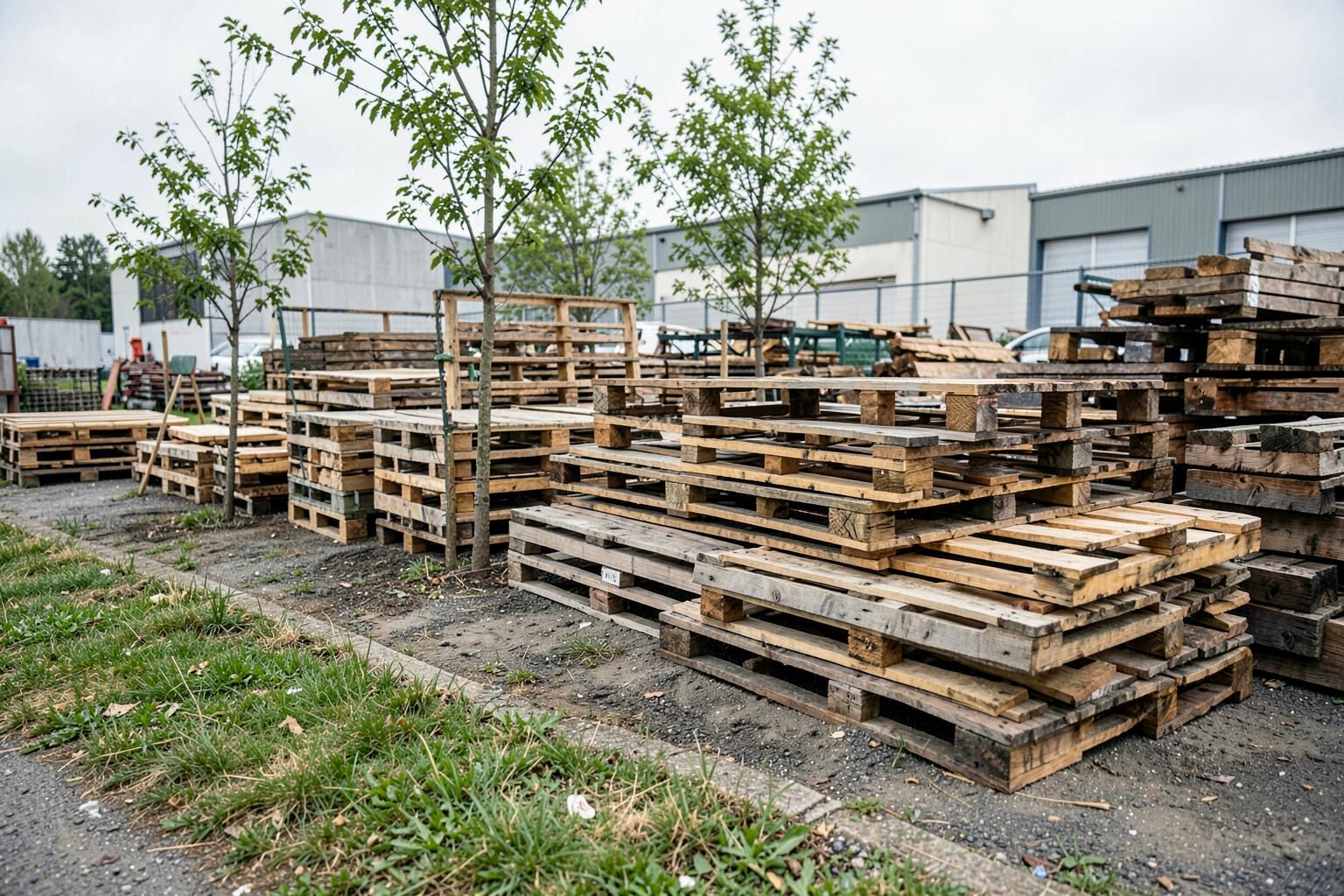
A pallet that goes back to work beats any recycling statistic. We sort properly, repair what can be repaired, and only recover material from timber that's genuinely finished.
The hierarchy, applied to pallets
The England waste prevention programme sets the direction: keep goods and materials in circulation for as long as possible and at their highest value, including reuse, repair and remanufacture. For pallets, that's a sorting instruction.
In practice it's four questions, in order. Can this pallet go straight back into service? If not, can it be repaired economically? If not, can the timber be recovered as material? And separately: does it belong to a pooling operator? If so, it goes back to them.
Published by Palletmove. Last reviewed: 3 September 2026. Operational guidance. Palletmove does not publish carbon savings, diversion rates or tonnage claims until they can be evidenced from our own records of work carried out.
How it works in practice
What a reuse-first operation looks like
The mechanics that decide whether reuse actually happens on a site.
Sorting at source
Reusable, repairable, end-of-life and pooled stock separated as it comes in, not at the tipping face.
Repair before recycling
A cracked board or a split block is a repair job. Sending that pallet for chip wastes good stock.
Material recovery last
Recycling is for timber that genuinely can't re-enter service, not the default for anything tired-looking.
Pooled stock protected
Operator-controlled pallets are set aside for return. They're never bought, scrapped or recycled.
Waste reduction upstream
Cutting the number of pallets that reach end-of-life through better specification, handling and storage.
Records, not estimates
What we collect, recover and recycle is recorded from the work itself.
Reporting
What we will and will not put in a number
Sustainability teams are under real pressure for figures, and the pallet industry has been quick to supply them. We're more careful: a number that can't be traced to a record of work is a liability in an audit.
Once a service relationship is in place, we can provide factual activity data: collections made, volumes handled, categories separated and where they went. We won't provide a modelled carbon saving, a diversion percentage, or an accreditation we don't hold.
Sustainability cluster
Read further
- Reuse and recoveryHow the repair-or-recycle decision is actually made.
- Reuse and the waste hierarchyThe five-step hierarchy translated into practical pallet decisions.
- Reducing pallet wasteCutting the number of pallets that reach end-of-life at all.
- Pallet disposal and recyclingCorrect routes off site, and where waste classification bites.
- Pallet recoveryThe repair and return-to-service operation.
- Pallet managementStructured pallet flow across one site or many.
- PPWR explainedPackaging regulation, kept distinct from sustainability claims.
Building a pallet workstream into an environmental programme?
Call 023 8017 1048 and we'll give you defensible operational facts, not invented figures.