
Knowledge Centre — reuse, recovery & reporting
Pallet disposal and recycling: choosing the right route
"Disposal" is usually the wrong first word. Most pallets leaving a site still have service life in them, and the ones that do not are a material recovery question before they are a waste question.
Published by Palletmove. Last reviewed: 3 September 2026. Operational guidance, not a legal ruling. Whether a specific material counts as waste is for you and your regulator or adviser to confirm — and we don't publish generic diversion rates or tonnages; any figures we give come from work we've actually done on your sites.
Sort before you decide
A pile of pallets is nearly always four piles that have not been separated yet: reusable stock, repairable stock, genuinely end-of-life timber, and pooled operator stock that was never yours. Route decisions made before that separation are guesses, and they usually destroy value.
The national policy direction, set out in the England waste prevention programme, is to keep goods and materials in circulation for as long as possible and at their highest value — including reuse, repair and remanufacture. Applied to pallets, that means a repairable pallet going to chip is a failure of sorting, not an environmental outcome.
Where waste classification starts to matter
GOV.UK guidance on importing and exporting waste makes clear that shipment controls depend on whether the material is legally classed as waste. That classification carries consequences, and it is not something a service provider should decide on your behalf in a phone call.
If your material might be waste, get the classification confirmed by someone competent before it moves, particularly if any movement crosses a border. We'll flag where we think the question sits, but the classification itself is for your adviser or regulator.
Pooled pallets are never a disposal route
Operator-controlled pooled pallets cannot be recycled, scrapped, sold or sent for chip by the site holding them. They go back to their operator. Treating them as ordinary surplus stock is the most expensive disposal mistake we routinely see.
Routing
Four piles, four destinations
| Category | How to recognise it | Route | Palletmove service |
|---|---|---|---|
| Reusable | Structurally sound, no broken bearers, deck intact enough for its intended load. | Back into service, internally or through resale. | Surplus purchase or collection |
| Repairable | Localised damage: a cracked board, a split block, a loose fixing. | Repair and return to service — the highest-value outcome after direct reuse. | Pallet recovery |
| End-of-life timber | Structural failure, contamination, or damage beyond economic repair. | Material recovery instead of landfill. | Pallet recycling |
| Pooled operator stock | Distinct colour, operator branding, uniform controlled construction. | Return through the operator's own network. | Identified and separated, never purchased |
Before you book anything to leave site
- Physically separate the four categories rather than sorting on paper.
- Count each category — a volume estimate changes the commercial answer entirely.
- Photograph representative examples of each pile.
- Identify any pooled or branded stock and set it aside for its operator.
- Note any contamination — chemical, food, or foreign material — before offering the timber anywhere.
- Confirm internally whether anything in the pile has been classed as waste, and by whom.
When to bring in someone else
- Any question about whether material is legally waste.
- Any movement of possible waste across a border.
- Contaminated timber, where the contaminant determines the route.
- Pooled stock accumulations, which belong with the operator.
- Reporting claims — get the numbers from records, never from estimates.
Next
Continue
- Pallet recyclingFor timber that genuinely cannot re-enter service.
- Pallet recoveryRepair and return to service before recycling.
- Pallet clearanceOne-off removal of an accumulated pile.
- Pallet collectionScheduled or one-off collection of unwanted pallets.
- Pallet managementA managed arrangement instead of repeated one-off disposals.
- SustainabilityThe reuse-first approach in full.
- Talk to PalletmoveDescribe the pile and we will suggest the routes.
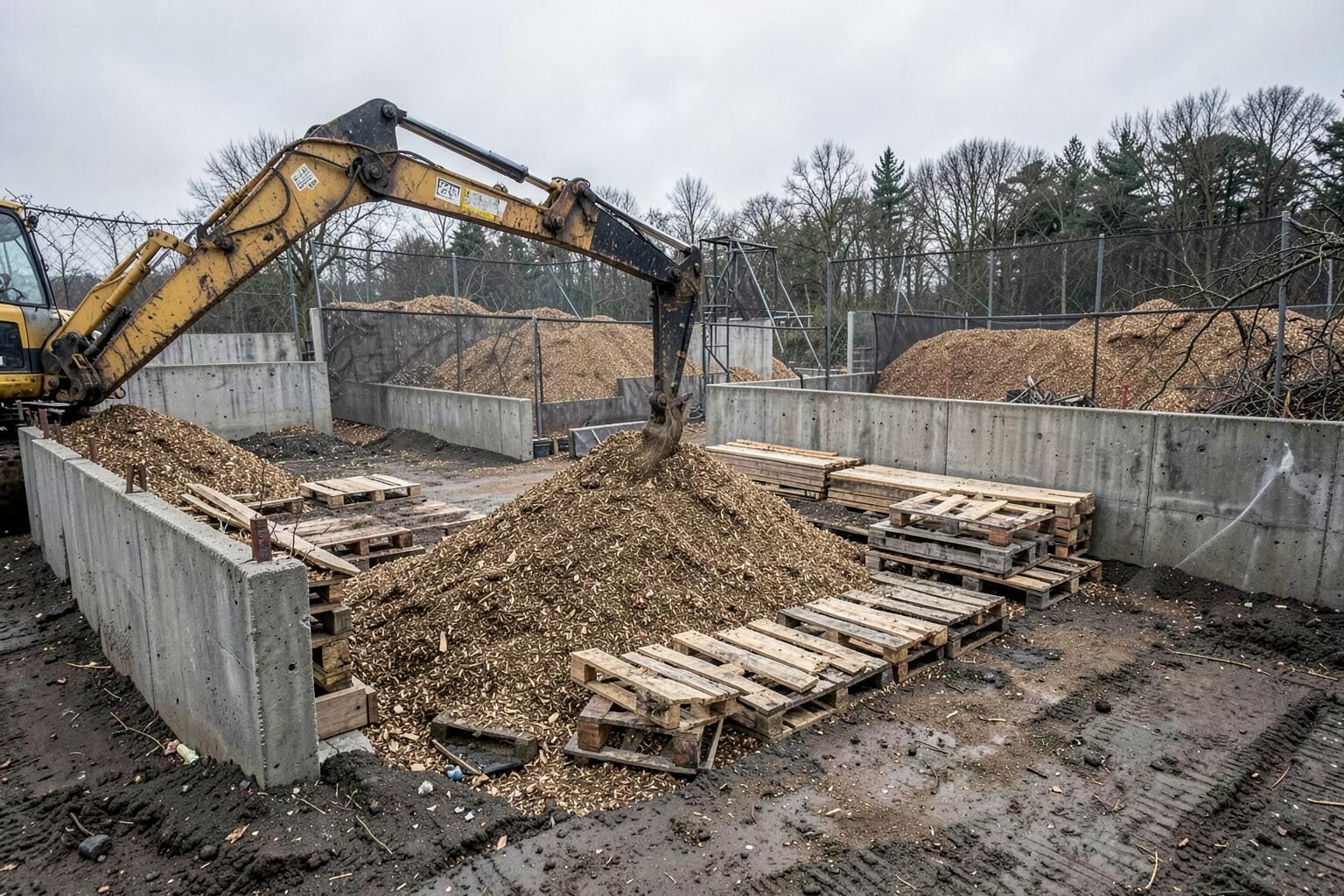
Pile of mixed pallets and no clear route?
Send photographs and rough counts. We will tell you what is reusable, what is repairable and what genuinely is not.